Nindooinbah Homestead, Heritage homestead in Queensland, Australia.
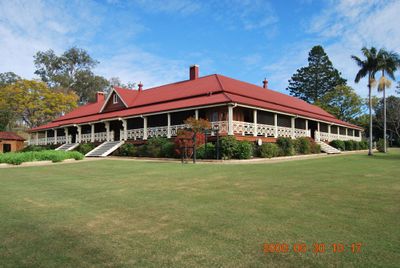
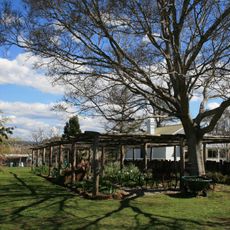
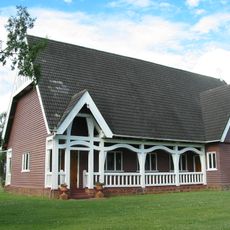
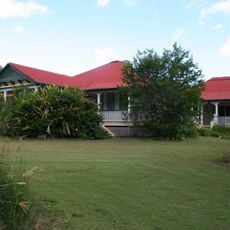
Nindooinbah Homestead is a single-storey timber house on low stumps, clad in wide chamferboards with painted corrugated iron roofs. Its E-shaped plan has three rectangular wings around a northwest courtyard, entered through a semi-enclosed porch reached by a timber pergola. Most rooms open off a continuous verandah through wide French doors. The 1906 Dods dining room has silky oak panelling, a vaulted ornamental plaster ceiling and bay windows.
Construction began in 1860 with an L-shaped building, which architect Robin Dods later transformed into its current E-shaped form between 1906 and 1907. This architectural redesign significantly changed the homestead's appearance and reflects how the property evolved over nearly fifty years.
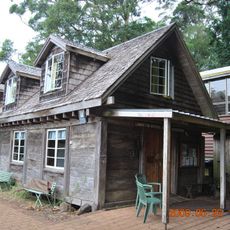
The homestead's name is not explained in the sources, but the property is closely tied to the Collins family: William Collins bought Nindooinbah in 1906 and engaged architect Robin Dods, and in the 1980s Margaret Collins and her husband, artist Patrick Hockey, restored the house and grounds. Hockey built a separate studio in a vernacular Australian style and a tea house in a man-made lagoon inspired by the Willow Pattern.
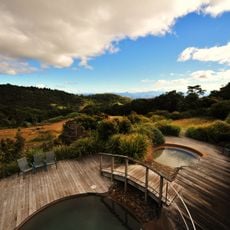
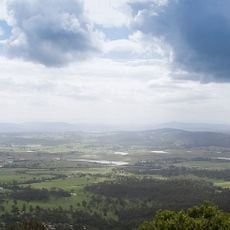
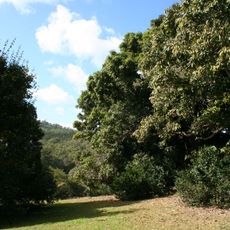
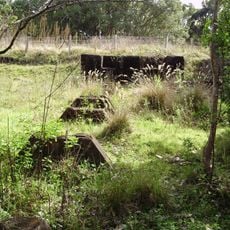
The house sits in extensive gardens with views southeast over a lagoon and valley; the pastoral outbuildings, including the woolshed, cattle yards and managers house, lie northwest of it beyond the home fence. The woolshed, a permanent structure by 1857, has served as men's quarters and storage since about 1863, when local squatters turned from sheep to cattle.
The woolshed, standing by 1857, is probably one of the oldest in Queensland, and its quality and intactness make it very rare. From about 1863 local squatters turned their runs over to cattle, so it served for decades as men's quarters and storage rather than for shearing.
The community of curious travelers
AroundUs brings together thousands of curated places, local tips, and hidden gems, enriched daily by 94,089 contributors worldwide.