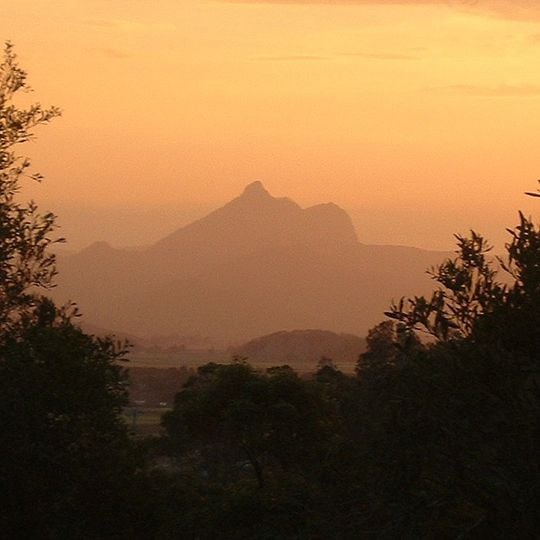
Tweed Volcano, Extinct volcano in New South Wales, Australia
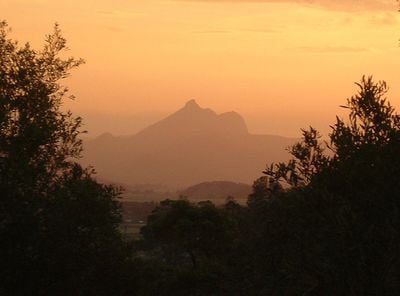
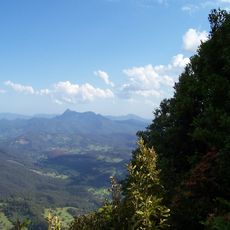
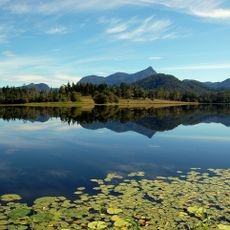
Tweed Volcano is a partly eroded Early Miocene shield volcano in northeastern New South Wales, about 100 km across when active and fed by the East Australia hotspot. Its central plug is Mount Warning, 1,156 m high, ringed by an erosion caldera roughly 30 km wide. Remnants include the Lamington Plateau, Springbrook Plateau and the Border Ranges between New South Wales and Queensland.
The volcano formed as the Australian continent drifted over an underground hotspot and remained active over a long period before becoming dormant approximately 20 million years ago. Since then, erosion and weathering have significantly altered the original structure.
The surrounding Gondwana Rainforests contain over 500 waterfalls and provide habitat for native plants including Doryanthes palmeri and Dendrobium speciosum.
The area is crisscrossed with hiking trails of varying difficulty that make different parts of the volcanic formation accessible. Visitors should expect variable weather and bring sturdy footwear and plenty of water.
The caldera rim is pierced by two gaps that let roads through: Kyogle Road crosses the western gap between Mount Burrell (933 m) and Lofts Pinnacle. The caldera floor holds rich volcanic soils, and sugarcane is the main crop grown there. Egg Rock, called Kurraragin in Yugambeh, and Turtle Rock are rhyolite formations from subsidiary vents.
The community of curious travelers
AroundUs brings together thousands of curated places, local tips, and hidden gems, enriched daily by 94,049 contributors worldwide.