Hawaiian Islands Humpback Whale National Marine Sanctuary, Marine sanctuary in Hawaii, United States
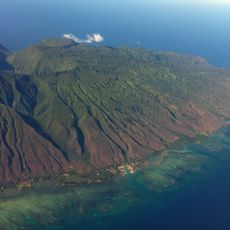
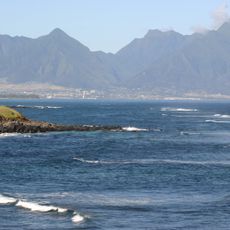
The Hawaiian Islands Humpback Whale National Marine Sanctuary is a protected marine area surrounding the main Hawaiian Islands where whales migrate and breed. The sanctuary covers waters known for their importance to the overall health and reproduction of the whale population.
In March 1982 NOAA proposed a national marine sanctuary in Hawaiian waters, but Governor George Ariyoshi suspended consideration in early 1984 after fishing groups objected. Congress directed NOAA to study the idea again in October 1990, and designation came on November 4, 1992. Governor Benjamin Cayetano formally approved the sanctuary only on June 5, 1997, after public meetings on each main island and the creation of a Sanctuary Advisory Council.
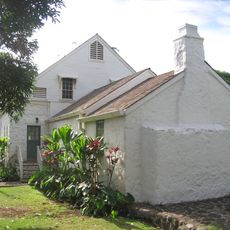
The sanctuary's Education Center in Kihei, Maui, holds exhibits on the natural and cultural history of humpback whales and other marine life, with public lectures and a marine science library. A second visitor center, Kauaʻi Ocean Discovery, opened in Lihue, Kauai, in 2020.
The best viewing season runs from November through April when whales are present in the waters and can be spotted from boats or shore. Visitors should maintain respectful distance and follow guidelines to avoid disturbing the animals during observation.
The sanctuary is the only US National Marine Sanctuary aimed at a single species, and it has no no-go, no-wake or no-take zones of its own; enforcement is left to other agencies. Permitted dumping of ship waste is even allowed inside its boundaries. Its Education Center in Kihei, Maui, holds a marine science library.
The community of curious travelers
AroundUs brings together thousands of curated places, local tips, and hidden gems, enriched daily by 92,576 contributors worldwide.