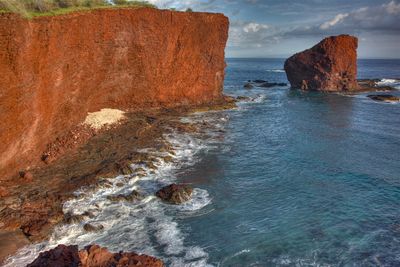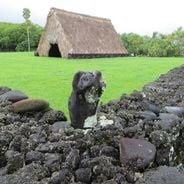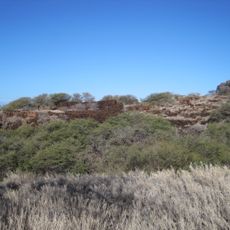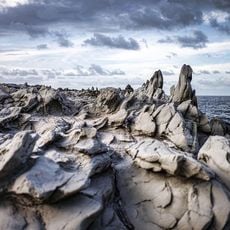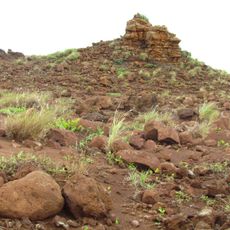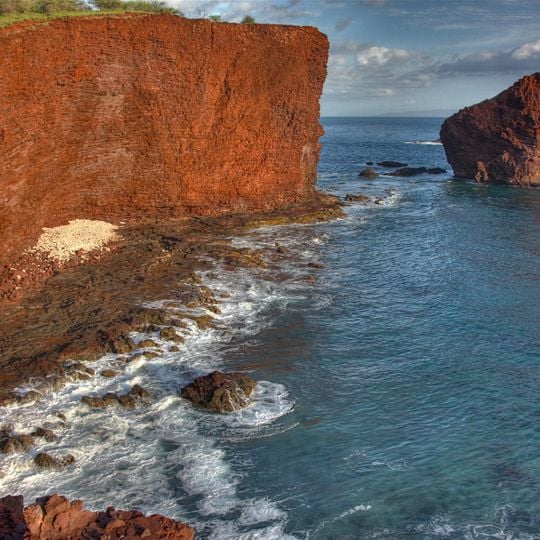
Pu'upehe Platform, Archaeological site and sea stack in Lanai island, Hawaii.
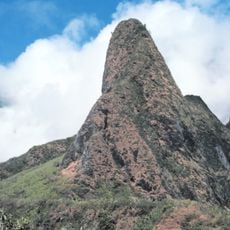
Pu'upehe is a triangular rock formation that rises approximately 150 feet from the ocean between Manele Bay and Hulopoe Bay, with a diameter of about 70 feet at its peak. The distinctive stack stands isolated in the water and serves as a visible landmark from the nearby shoreline.
Archaeological examinations conducted in 1921 by Kenneth Emory discovered bird bones at the site, suggesting its use as a possible shrine for hunters or fishermen. These findings indicate the place served ritual or practical purposes for early inhabitants.
The rock carries the name of Pehe from Hawaiian legend, a chief's daughter who lost her life in a nearby cave during a violent storm. This story connects the place to the islands' oral traditions that locals still honor today.
The rock lies close to shore and is best viewed from Hulopoe Beach or during a boat trip, which allows visitors to observe the formation from different angles. The surrounding waters have varying conditions, so it helps to check local conditions before planning water or beach activities.
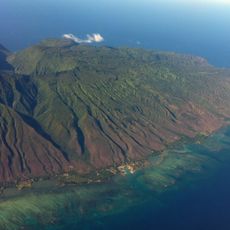
The surrounding waters contain extensive coral reef formations where visitors can observe native marine species through snorkeling and diving. This underwater life adds to the experience beyond the archaeological site itself.
The community of curious travelers
AroundUs brings together thousands of curated places, local tips, and hidden gems, enriched daily by 91,164 contributors worldwide.