Mount Amukta, Active stratovolcano in Aleutian Islands, United States.
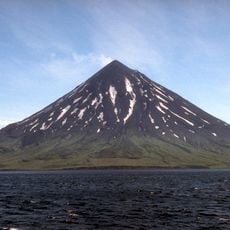
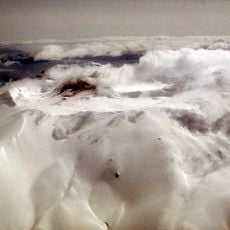
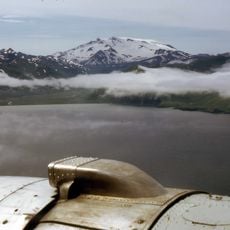
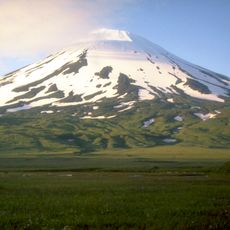
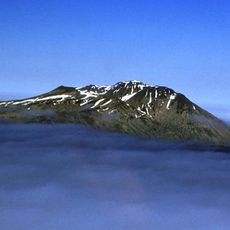
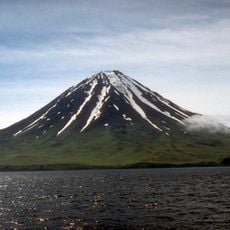
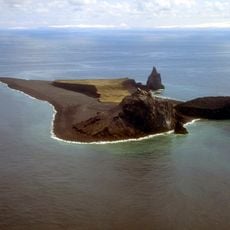
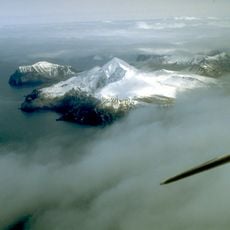
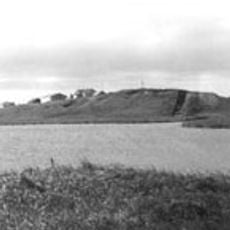
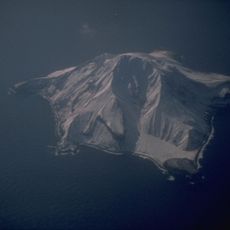
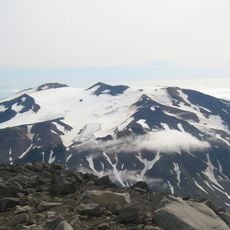
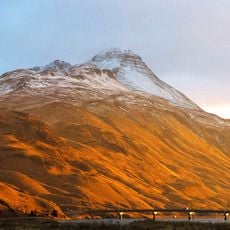
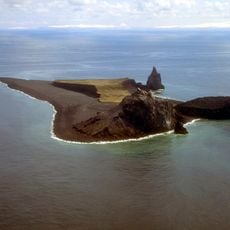
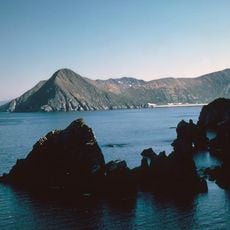
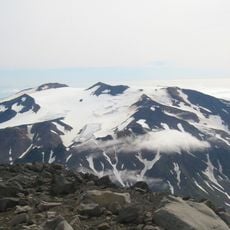
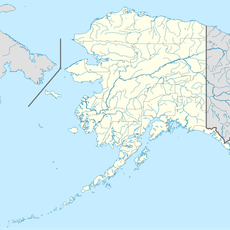
Mount Amukta is an active stratovolcano on a roughly circular island in the Islands of Four Mountains group, in Alaska. The island has no harbor or roads, and the volcano dominates the entire landmass, with its slopes descending directly to the shoreline.
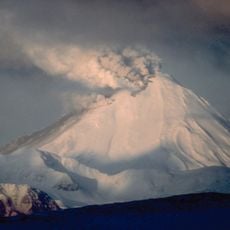
Petr Krenitsyn named the volcano in 1768 and Mikhail Levashov charted it in 1771. Activity was reported from 1786 to 1791 and again in 1876; an eruption on 13 February 1963 sent ash and lava from the central crater and parasitic vents, with a flow reaching the sea at Traders Cove. Pilots observed plumes in 1987 and 1996, and weak activity was last recorded on 2 March 1997.
The Aleutian Islands have been home to the Unangan people for thousands of years, who learned to live alongside active volcanoes. Amukta island itself has no permanent inhabitants today, but it remains part of the broader ancestral landscape of these communities.
The island is very remote and can only be reached by charter floatplane or boat from the Alaska Peninsula. Weather in the Aleutians shifts quickly and can catch even experienced travelers off guard, so careful planning is essential before any visit.
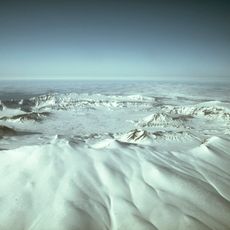
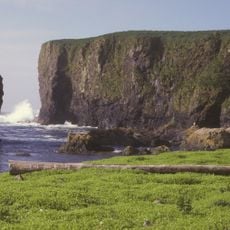
The ridge that the cone sits on is not buried beneath it: it runs east-west and reappears on the island's southwest and east sides, where its extensions outline an older caldera about 6 km across, open to the sea on the south. A cinder cone also stands near the northeastern shore.
The community of curious travelers
AroundUs brings together thousands of curated places, local tips, and hidden gems, enriched daily by 94,043 contributors worldwide.