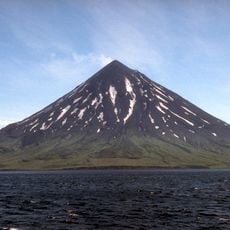
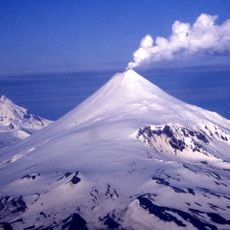
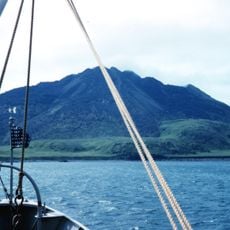
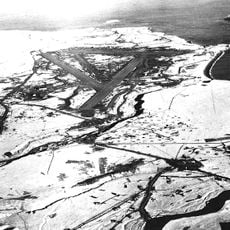
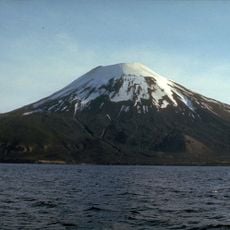
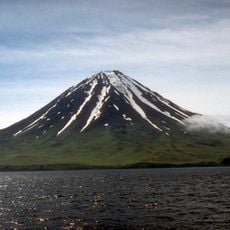
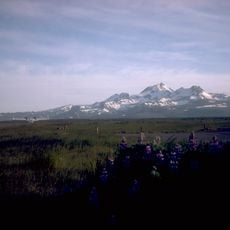
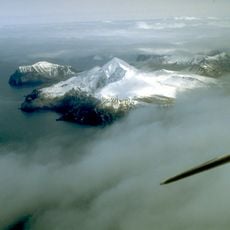
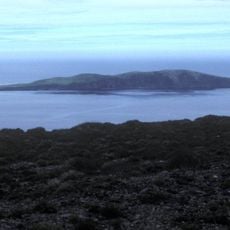
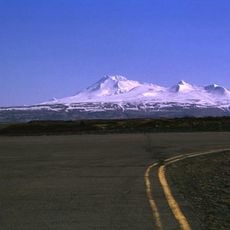
Mount Okmok, Shield volcano in Aleutian Islands, Alaska, US.
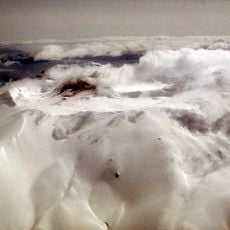
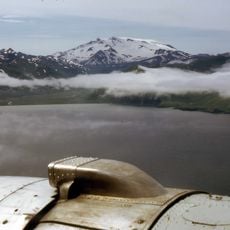
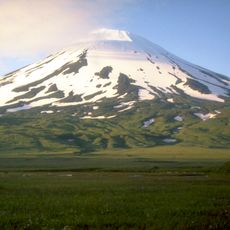
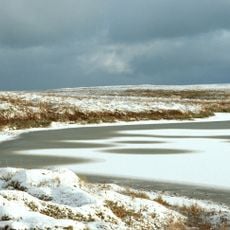
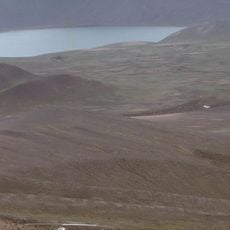
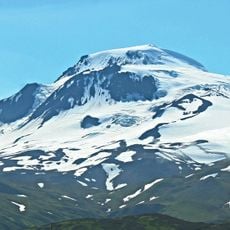
Mount Okmok is a 30-kilometre-wide shield volcano on northeastern Umnak Island, Alaska, capped by a 10-kilometre-wide caldera breached to the northeast by Crater Creek through a notch called the Gates. The rim rises about 300 metres above a flat floor dotted with cones named A to H and Ahmanilix, lava flows and lakes. The highest point on the rim is 967 metres.
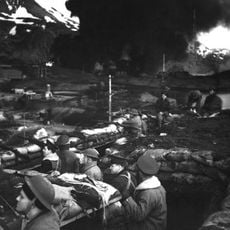
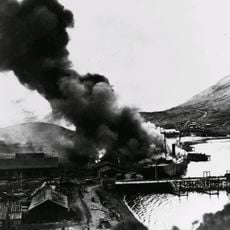
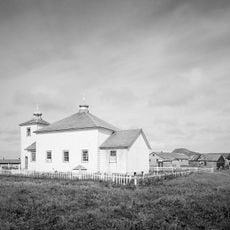
Two caldera-forming eruptions with a VEI of 6 shaped Okmok during the Holocene; the younger caldera formed about 2,400 years ago, and the 43 BCE eruption caused a volcanic winter linked to failed Nile floods in Egypt. The 1817 eruption destroyed an Aleut village at Cape Tanak, and between 1805 and 1988 the volcano erupted 14 times. On 12 July 2008 an explosive eruption began without warning, sending an ash column about 15 km high and creating new vents and lakes in the caldera.
The Aleut name of the caldera is Unmagim Anatuu, whose second word means "to be thick". The 2008 eruption formed a new cone named Ahmanilix, Atkan for "surprising". The 1817 eruption destroyed an Aleut village at Cape Tanak.
The location is remote and requires careful planning to visit, as it can only be reached by chartered flights and boats from nearby settlements. Visitors should prepare for harsh conditions including strong winds and frequent fog that can affect travel and visibility throughout the year.
The 2008 eruption opened a new cone, Ahmanilix, whose name means "surprising" in the Atkan language. It stands about 300 metres high just west of Cone D, the largest cone on the caldera floor.
The community of curious travelers
AroundUs brings together thousands of curated places, local tips, and hidden gems, enriched daily by 94,108 contributors worldwide.