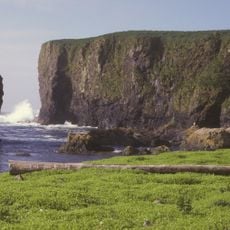
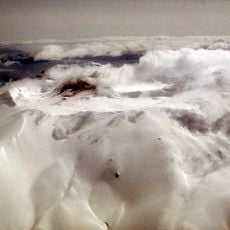
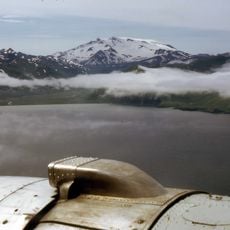
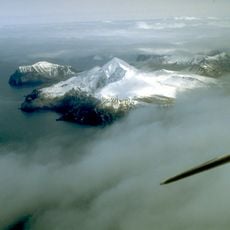
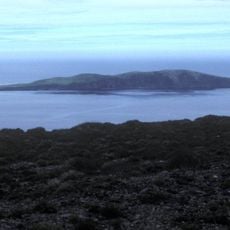
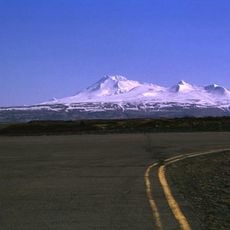
Mount Vsevidof, Stratovolcano on Umnak Island, Alaska, US.
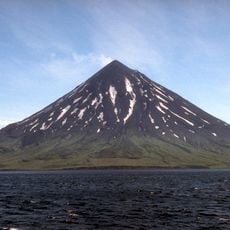
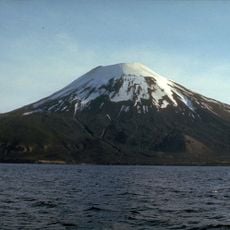
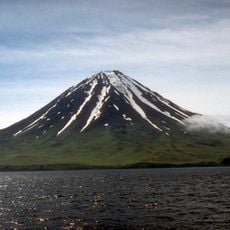
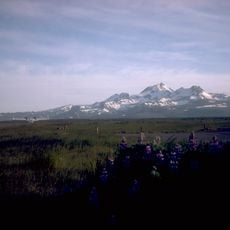
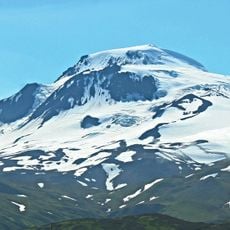
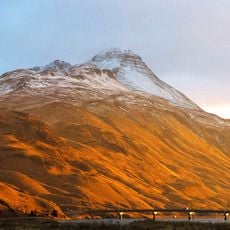
Mount Vsevidof is a stratovolcano on Umnak Island featuring a symmetrical cone shape with a base that spans several kilometers across the terrain. The structure displays the typical form of an active or recently active volcanic cone with steep slopes and a defined summit.
Mount Vsevidof was likely discovered by Russian explorer Gavriil Pribylov, who navigated the Aleutians between 1773 and 1786 and named it after Andrew or Piotr Vsevidov, explorers active in the 1740s and 1750s. A reported eruption on 11 March 1957, following a 9 March earthquake, is considered questionable by the Alaska Volcano Observatory. Possible earlier activity has been dated to 1250, 1450–1455, 1490, 1500, 1530 and 1757.
The name was given by Russian explorer Gavriil Pribylov, who navigated the Aleutians between 1773 and 1786, likely honouring Andrew or Piotr Vsevidov, both active in Aleutian exploration in the 1740s and 1750s. A popular explanation linking the name to Russian words for "all" and "sight" is considered incorrect.
Access requires travel by sea or air, as the isolated location has no established road connections to nearby settlements. Visitors should prepare for changeable weather conditions and difficult terrain.
Mount Vsevidof's name is often said to come from the Russian words for "all" and "sight", but that explanation seems incorrect. The volcano was likely named by Gavriil Pribylov, who sailed the Aleutians between 1773 and 1786, to honour the explorers Andrei or Piotr Vsevidov, active in the islands in the 1740s and 1750s.
The community of curious travelers
AroundUs brings together thousands of curated places, local tips, and hidden gems, enriched daily by 92,620 contributors worldwide.