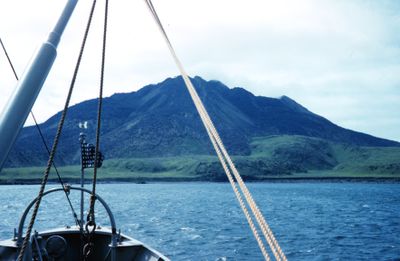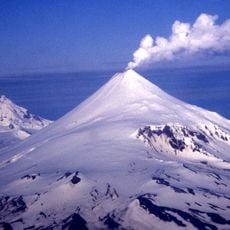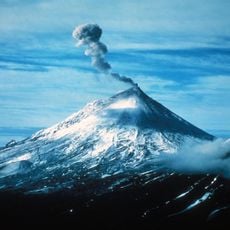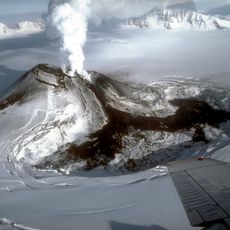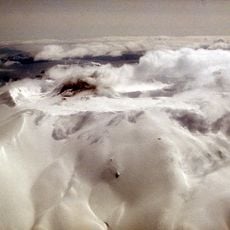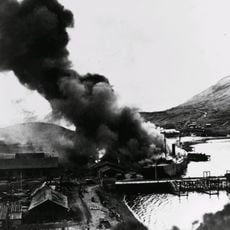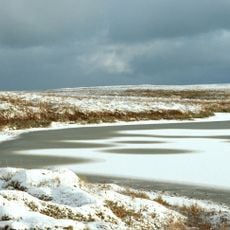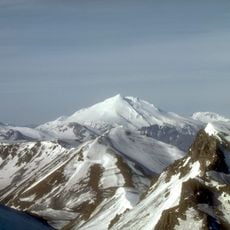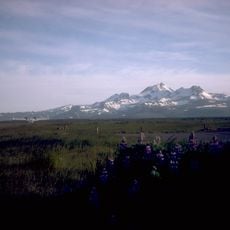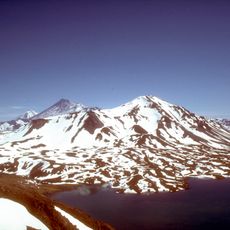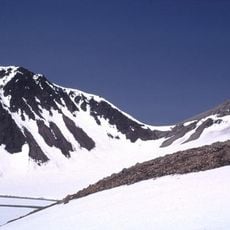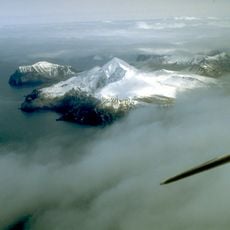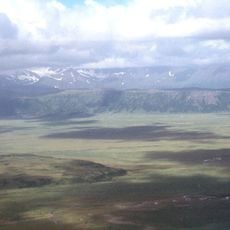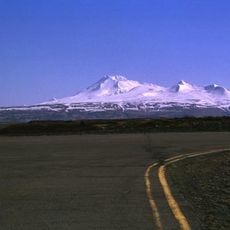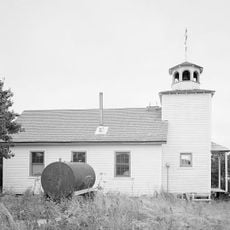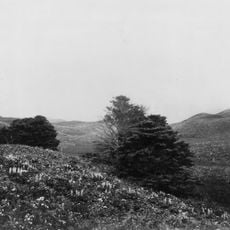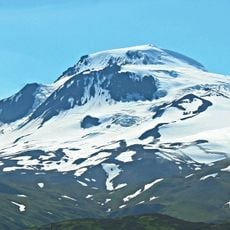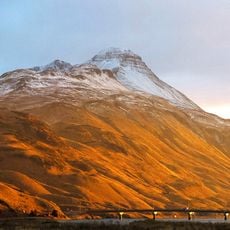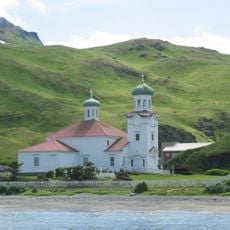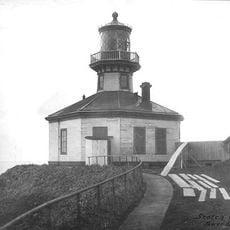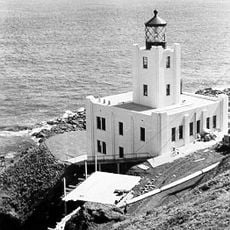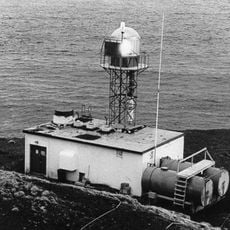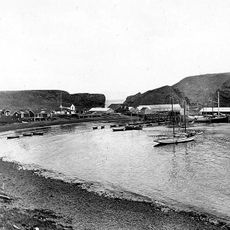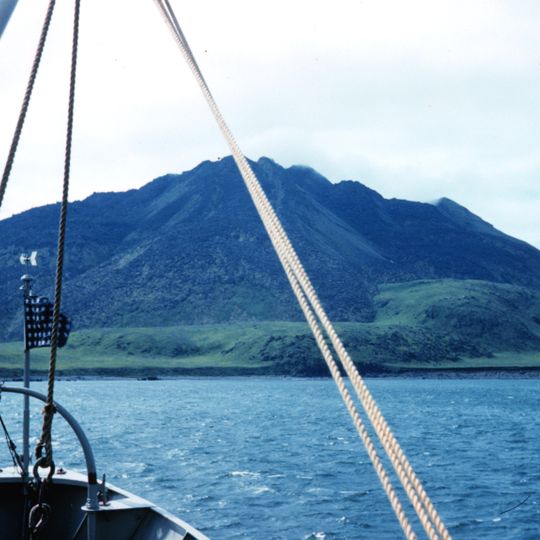
Amak Volcano, Stratovolcano in Aleutian Islands, Alaska, US.
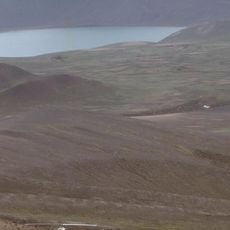
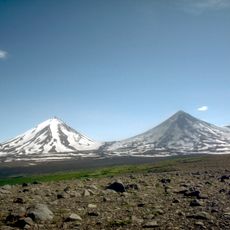
Amak Volcano is a stratovolcano standing on its own island in the Aleutian Islands chain, rising roughly 1,600 feet above sea level. Blocky lava flows extend from the summit down the surrounding flanks, creating the distinctive rocky terrain that characterizes the island.
The volcano has been active since prehistoric times and recorded three documented eruption phases, with two occurring in the 18th century and another at the start of the 19th century. This pattern of eruptive activity shaped the island's geological evolution over centuries.
The volcano sits on land traditionally inhabited by Alaska Native peoples who developed deep knowledge of volcanic landscapes and their rhythms. Local communities have maintained connections to this environment passed down through generations.
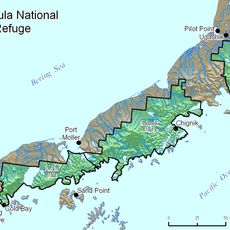
Reaching the island requires boat transportation, as aircraft landings are not permitted there. Cold Bay serves as the nearest inhabited town and base for visits, and weather conditions can change rapidly in this remote location.
The volcanic rock contains unusually high concentrations of potassium compounds and rare-earth elements that set it apart from other volcanoes in the island chain. This distinctive mineral composition makes it a notable subject for geological research.
The community of curious travelers
AroundUs brings together thousands of curated places, local tips, and hidden gems, enriched daily by 91,242 contributors worldwide.