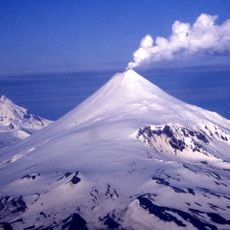
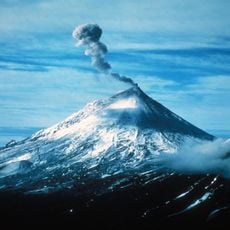
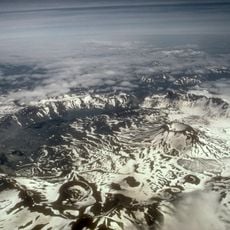
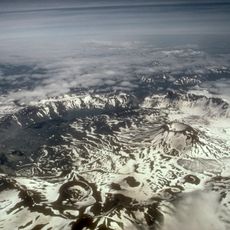
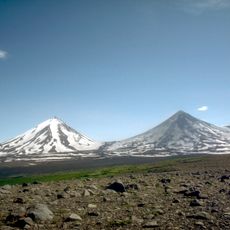
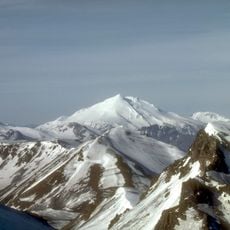
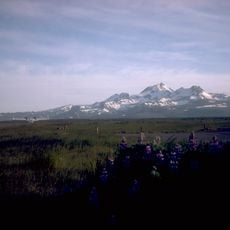
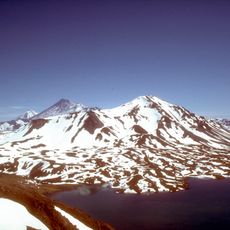
Mount Dana, Stratovolcano in Alaska Peninsula, United States.
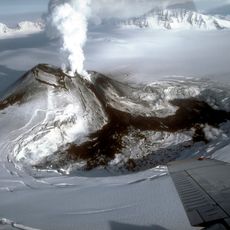
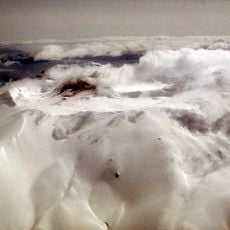
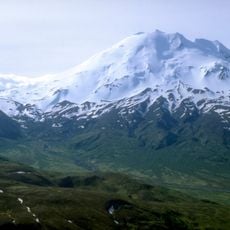
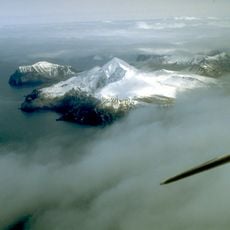
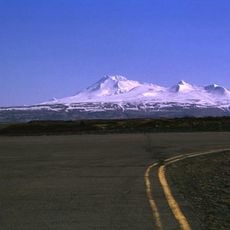
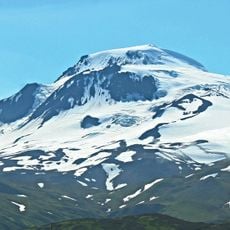
Mount Dana is a small stratovolcano on the Alaska Peninsula, set northeast of Canoe Bay inlet at the head of Pavlof Bay. It rises 1,354 metres and is topped by a crater about 1.5 kilometres by 2 kilometres. Its rocks are intermediate calc-alkaline, with remnants of an andesite dome just west of the crater and east of Knutson Lake.
The volcano experienced a major eruption roughly 3,840 years ago that sent pyroclastic flows all the way to Canoe Bay inlet. This event left lasting marks on the surrounding landscape.
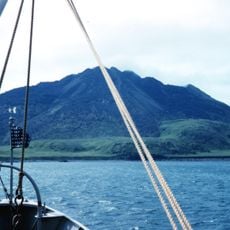
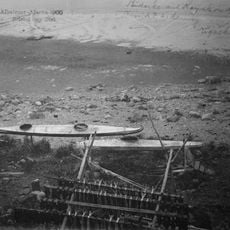
The name Dana refers to James Dwight Dana, the American geologist who studied Pacific volcanoes and whose work shaped early volcanology. The volcano rises above Pavlof Bay and Canoe Bay, waters used by Alaska Peninsula communities for hunting and travel. Its slopes and nearby cold springs are landmarks for people moving along the coast.
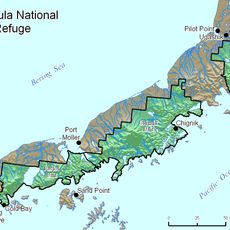
Mount Dana lies 555 miles (893 km) from Anchorage, northeast of the Canoe Bay inlet at the head of Pavlof Bay. The volcano is easily accessible from Canoe Bay at any time of the year.
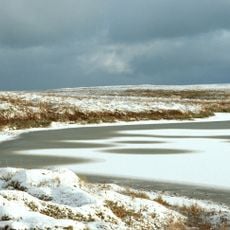
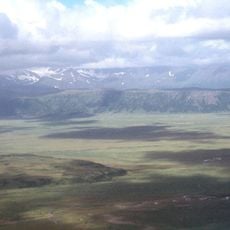
Cold springs and a large tufa mound near the volcano reveal evidence of past thermal activity and mineral-rich deposits. These features hint at an ongoing geological story that visitors can observe directly.
The community of curious travelers
AroundUs brings together thousands of curated places, local tips, and hidden gems, enriched daily by 94,003 contributors worldwide.