Mount Aniakchak, Caldera and stratovolcano in Lake and Peninsula Borough, Alaska, US
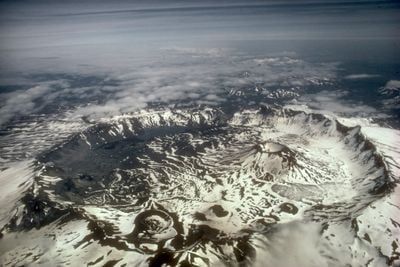
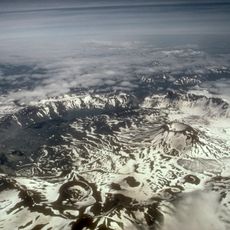
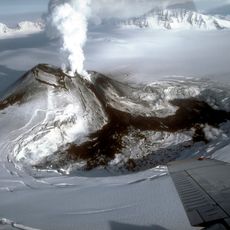
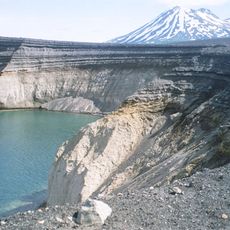
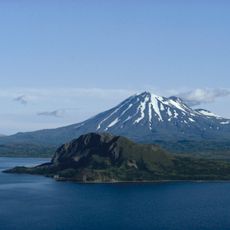
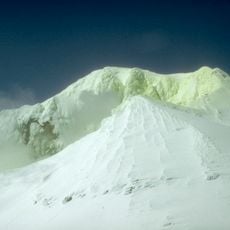
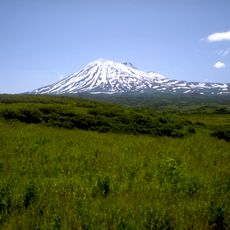
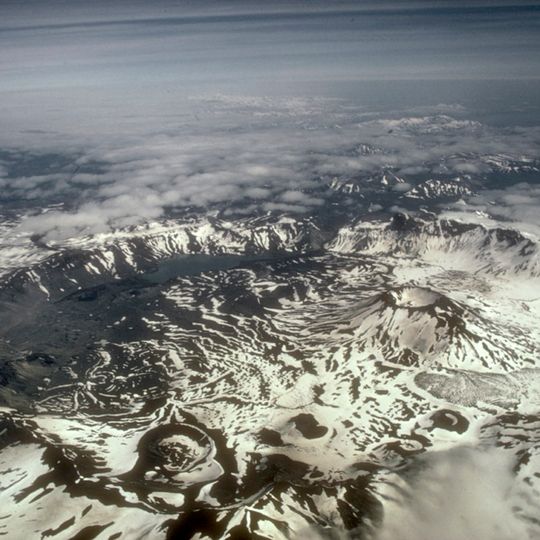
Mount Aniakchak is a 10-kilometer-wide caldera with a 200-meter-deep V-shaped gap called The Gates in its northeastern rim. The caldera floor holds Surprise Lake, a milky-green body of water fed by hot and cold springs, and Vent Mountain, a cone 2.5 kilometers wide and up to 1 kilometer high. Two water-filled maars and the 1931 Main Crater lie among the other cones and lava domes.
The present caldera formed in the Aniakchak II eruption of 1628/1627 BCE, a VEI-6 event that sent pyroclastic flows down all flanks and caused a tsunami in Bristol Bay. Tephra fell as far as northern Europe, and the eruption depopulated the central Alaska Peninsula. The caldera lake later drained in one of the largest Holocene floods, and the last eruption, from May to mid-June 1931, built a new crater and spread ash over Alaskan towns.
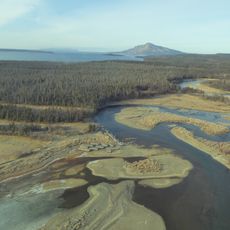
The name Aniakchak comes from the Alutiiq language, and the caldera is called Aniakchak Crater. The Aniakchak River, a National Wild and Scenic River, flows out through The Gates and is fed by Surprise Lake. The area is part of Aniakchak National Monument and Preserve, and the crater was designated a National Natural Landmark in 1967.
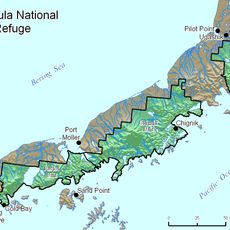
There are no roads; access is by floatplane or boat, and Port Heiden lies 25 kilometers west of the volcano. The caldera rim rises to 1,341 meters at Aniakchak Peak, and the only outlet is The Gates, a 200-meter-deep gap in the northeastern rim. Weather shifts quickly, so allow extra days.
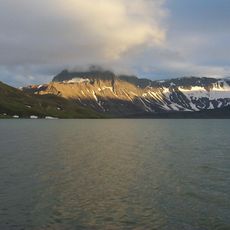
Surprise Lake, the milky-green water body against the northeastern wall, is about 19.5 metres deep and fed by hot springs, cold springs and meltwater; hydrothermal inputs give it its colour. It drains through the 200-metre-deep v-shaped gap called The Gates, the caldera's only outlet, where the Aniakchak River begins.
The community of curious travelers
AroundUs brings together thousands of curated places, local tips, and hidden gems, enriched daily by 93,968 contributors worldwide.