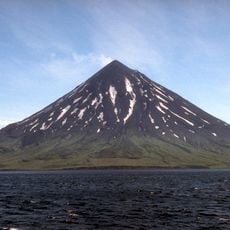
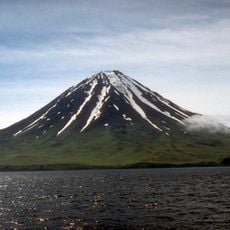
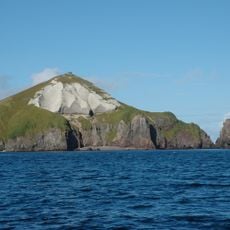
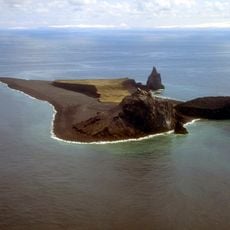
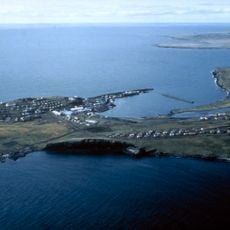
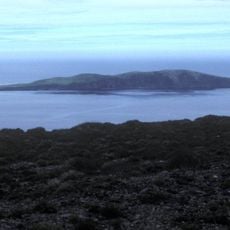
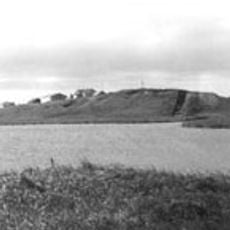
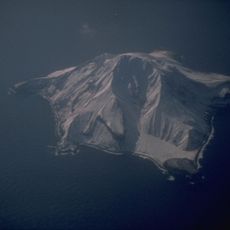
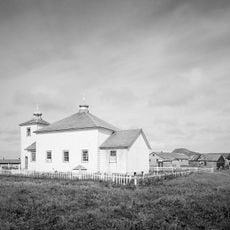
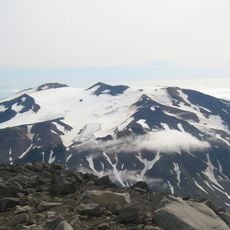
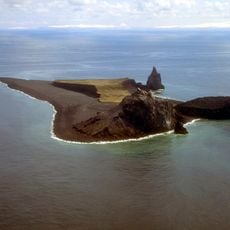
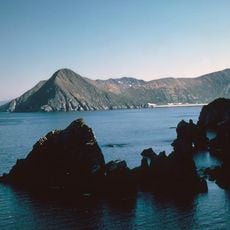
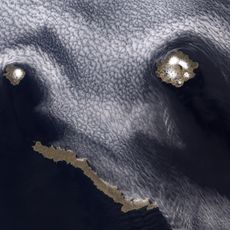
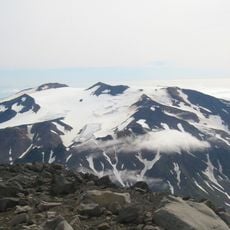
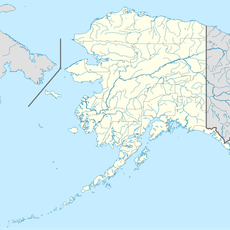
Mount Adagdak, Stratovolcano on Adak Island, Aleutian Islands, Alaska, United States.
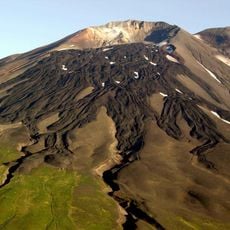
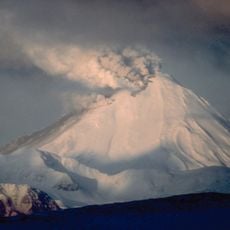
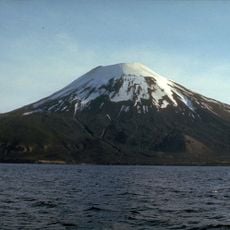
Mount Adagdak is a Pleistocene stratovolcano at the northern tip of Adak Island, about 1.4 km south of Cape Adagdak. It stands 610 m high and grew on the site of an earlier shield volcano; an andesitic lava dome fills the summit crater, and a slightly younger basaltic dome lies to the southeast. Its rocks are andesite, basalt and dacite, and fumarolic cracks mark the western slope.
The peak was officially named by the United States Geological Survey in 1948, taking its name from nearby Cape Adagdak. Scientific studies later revealed that the youngest volcanic rocks date between 205,000 and 215,000 years ago, marking the mountain's most recent activity.
The name Adagdak comes from nearby Cape Adagdak, assigned by the United States Geological Survey in 1948. The volcano sits on the northern tip of Adak Island, about 1,180 miles (1,900 km) from Anchorage, and its slopes are cut by fissures left by escaping volcanic steam.
Mount Adagdak stands on the northern tip of Adak Island, about 1.4 km (0.9 mi) south of Cape Adagdak and roughly 1,900 km (1,180 mi) from Anchorage. Reaching the island takes a long journey from mainland Alaska, so plan for several days of travel and supplies before heading to the mountain.
John Hunter of the company Quicklaunch has twice proposed Mount Adagdak's western slope as the site for a light-gas gun to launch small payloads into orbit for the International Space Station.
The community of curious travelers
AroundUs brings together thousands of curated places, local tips, and hidden gems, enriched daily by 92,736 contributors worldwide.