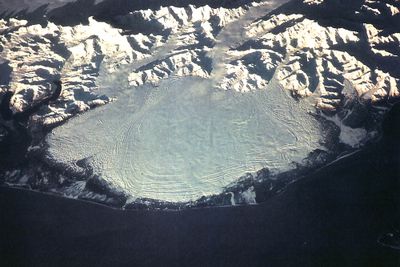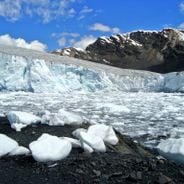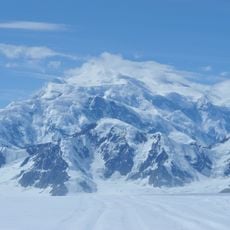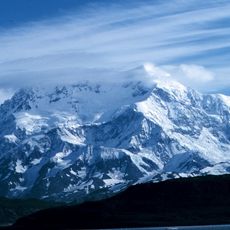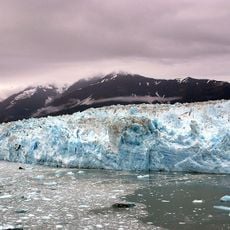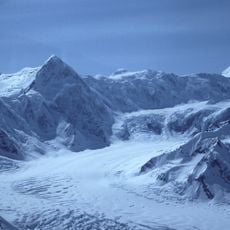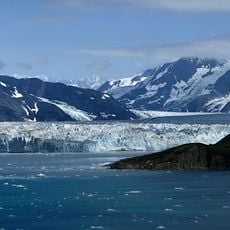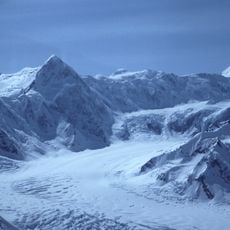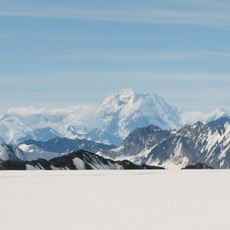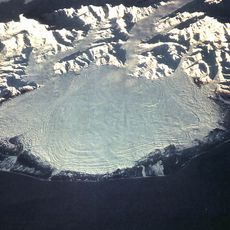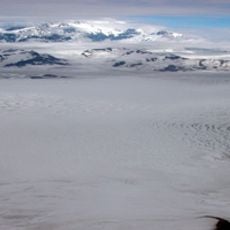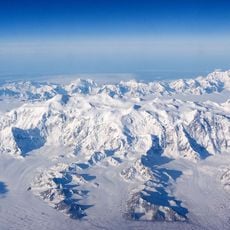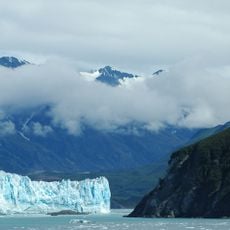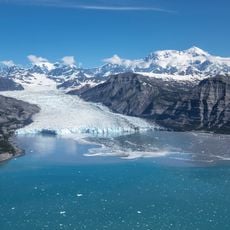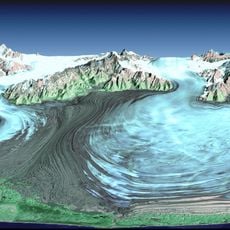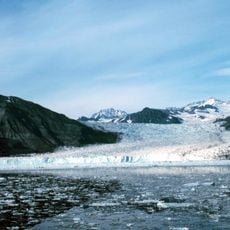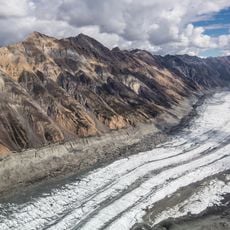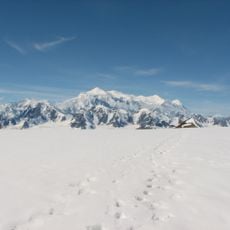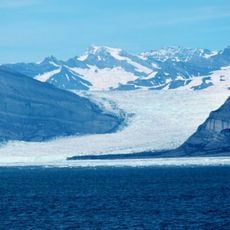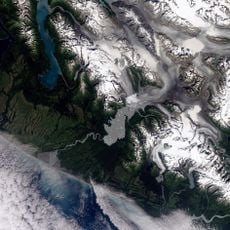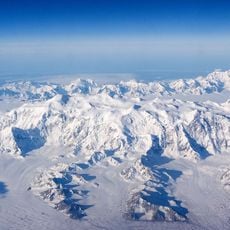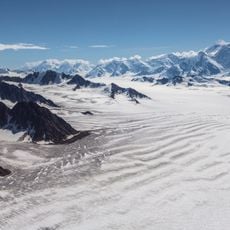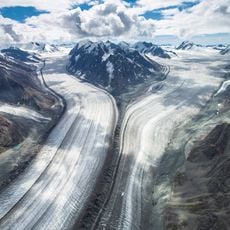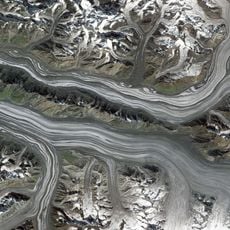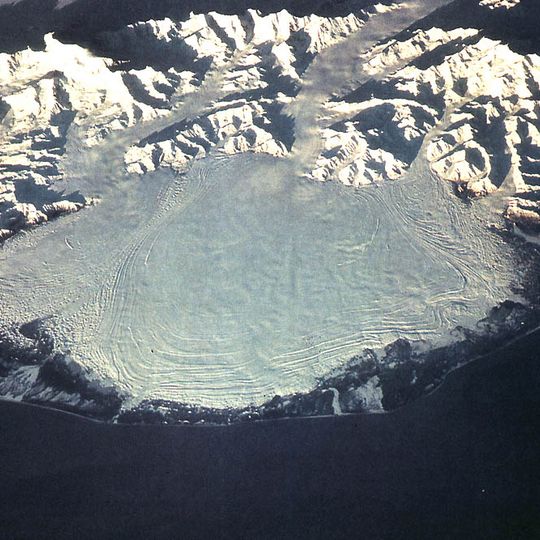
Malaspina Glacier, Piedmont glacier in Wrangell-St. Elias National Park, Alaska.
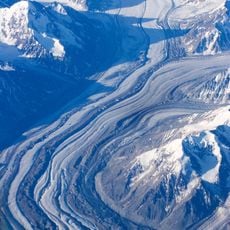
Malaspina Glacier is a piedmont glacier in Wrangell-St. Elias National Park that formed from the merger of several large ice streams flowing together across the landscape. Its surface displays distinctive patterns of moraines created where the Seward, Agassiz, and Marvine/Hayden glaciers meet.
The glacier was named after Alessandro Malaspina, a Tuscan explorer serving Spain's navy, who surveyed the region in 1791. His expedition brought attention to this ice field and gave it a name recognized across the world.
The Tlingit people call this massive ice formation Sít' Tlein, meaning big glacier in their language, reflecting how important this natural wonder has been to regional cultures for generations.
This location is best explored by air or through professional guided expeditions, as it lies in a remote national park with no direct road access to the glacier. Visitors should prepare for harsh weather and limited summer visiting windows, as climate conditions severely restrict when access is possible.
The glacier system lost roughly 20 meters of thickness between 1980 and 2000, documenting its impact on global water systems and sea level. This dramatic thinning reveals how changes in this massive ice field directly affect ocean levels worldwide.
The community of curious travelers
AroundUs brings together thousands of curated places, local tips, and hidden gems, enriched daily by 91,060 contributors worldwide.