Keys Desert Queen Ranch, Historical ranch in Joshua Tree National Park, California, United States
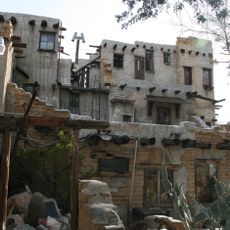
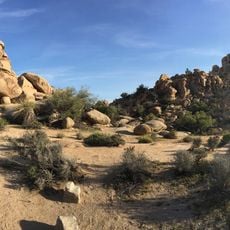
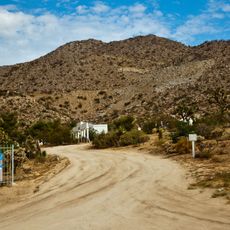
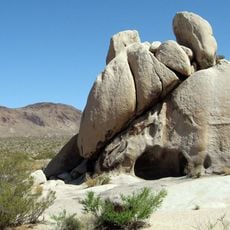
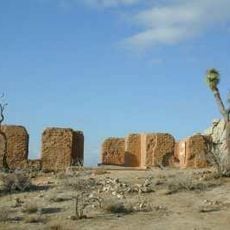
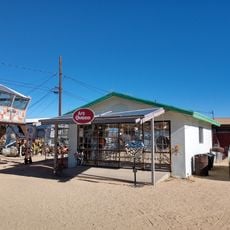
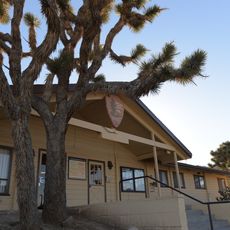
Keys Desert Queen Ranch is a complex of small frame buildings raised between 1910 and Bill Keys's death in 1969, set among granite outcrops in Joshua Tree National Park. It includes an adobe barn, a schoolhouse, a tack shed, a machine shed, several houses and cabins, a cemetery, and ore-processing equipment: an arrastra and a stamp mill.
William F. Keys arrived in the Twentynine Palms area in 1910 and took over the properties of cattle rustler Jim McHaney after McHaney's death, gradually expanding them into the Desert Queen, named after the nearby Desert Queen Mine. The frame buildings were raised between 1910 and Keys' death in 1969. Convicted of killing Worth Bagley in a dispute over the Wall Street Mill, Keys was paroled in 1950 and pardoned in 1956. The ranch was listed on the National Register of Historic Places on 30 October 1975.
The name Desert Queen comes from the nearby Desert Queen Mine, which Keys took over along with Jim McHaney's properties after McHaney's death. Keys married Francis M. Lawton in 1918, and the couple raised seven children here; three of them died and are buried in the ranch cemetery. Keys also kept a library at San Quentin, where he educated himself while serving for the killing of Worth Bagley.
Visiting the property requires joining a ranger-led tour, offered from October through May with advance reservations needed. Small group sizes mean spots fill up, so plan ahead if you want to see it.
The property contains a stamp mill and an arrastra, two machines used to crush and process ore in surprisingly effective ways. A small cemetery holds three of the Keys children, marking the hardships families faced living in this isolated desert location.
The community of curious travelers
AroundUs brings together thousands of curated places, local tips, and hidden gems, enriched daily by 92,816 contributors worldwide.