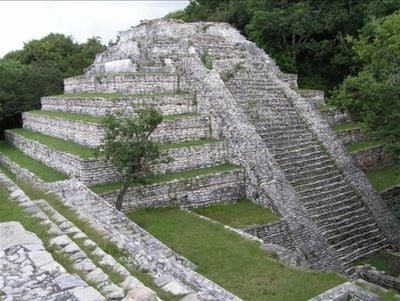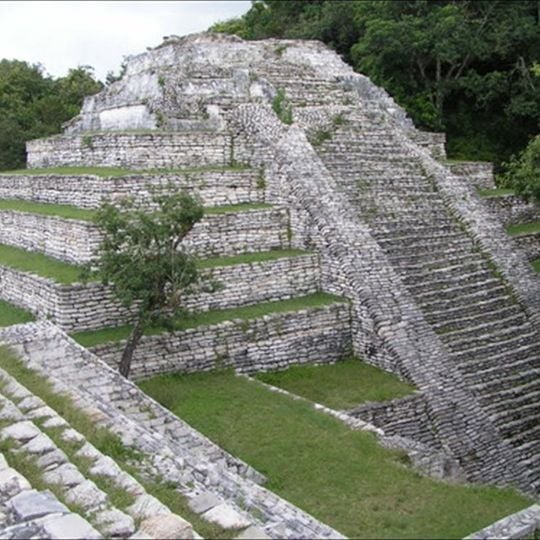
Tenam Puente, Archaeological site in La Trinitaria, Mexico
Tenam Puente is an archaeological site in the La Trinitaria region featuring limestone structures arranged on multiple terraces at 1600 meters elevation. The site overlooks the Balum Canan valley and displays the characteristic building style of the area.
Tenam Puente dates back to the Classic period (300–600 AD), but its main occupation came in the early Postclassic, roughly 900–1200 AD, after lowland Maya centers such as Palenque and Yaxchilán collapsed in the 9th century. The highland site, like nearby Chinkultic, survived and may have benefited from its rivals' decline. Its last recorded date is 874 AD, and it was abandoned around 1200 for reasons still unclear. Frans Blom and Oliver La Farge first mentioned it in their 1928 book Tribes and Temples.
The name Tenam comes from the Nahuatl word tenamitl, meaning wall or fortress, while Puente refers to a farm that existed here in the early 20th century. The site's buildings lack arches, corbels and roof combs, a trait shared with other highland Chiapas sites. Excavations have yielded jade objects, shell ornaments and stingray spines placed as offerings in burials.
The site is located approximately 12 kilometers south of Comitán and is reached via a turnoff from the Pan-American Highway 190 heading toward La Trinitaria. Visitors should be prepared for hilly terrain and possibly unpaved access routes.
A single stele dated to 790 AD represents the main decorated element discovered at the site and is now displayed at the archaeological museum in Tuxtla Gutiérrez. This artifact provides insight into the artistic traditions of the site's early period.
The community of curious travelers
AroundUs brings together thousands of curated places, local tips, and hidden gems, enriched daily by 94,304 contributors worldwide.