Laguna Brava, Karstic lake in Nentón, Huehuetenango, Guatemala
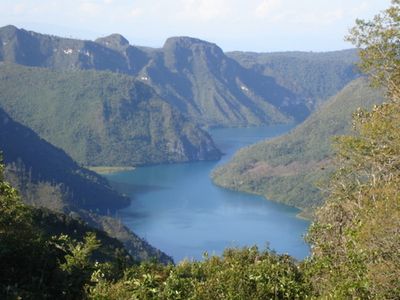
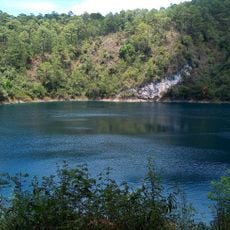
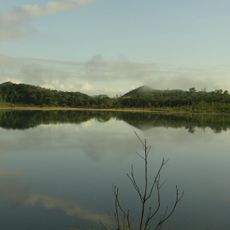
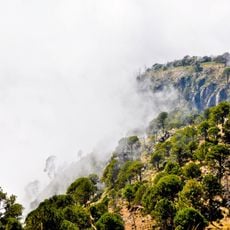
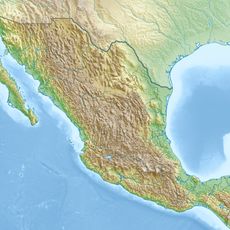
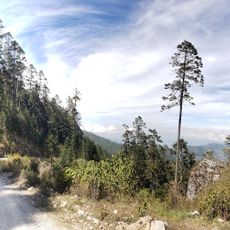
Laguna Brava is a karstic lake in the municipality of Nentón, Huehuetenango, Guatemala, near the Mexican border. It lies at 1,142 metres above sea level and is fed by streams descending from the Cuchumatanes range and by underground watercourses. The lake is about 8.9 kilometres long, making it the second-largest lake in western Guatemala after Lake Atitlán.
Around the year 2000, the lake and surrounding lands became the center of a dispute between local indigenous communities and foreign landowners seeking to establish a nature reserve. This conflict reflected broader questions about land rights and resource control in the region.
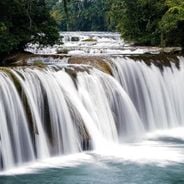
The lake's Maya-Chuj name, Ob' nhajab', combines ob' ("brava", fierce) and nhajab' ("lake"), taken from the sound of wind driving abrupt cascades down the steep surrounding slopes. Chuj Maya communities have lived around the lake since the 19th century, and in 2000 they defended their land use against new American owners who wanted to turn the area into a nature reserve.
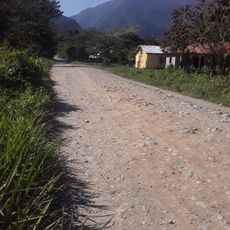
The lake can be reached through three entry points: El Aguacate, Yalambojoch, and San José Frontera, with El Aguacate offering more developed facilities. Plan your visit by choosing the entrance that best suits your needs and local conditions on the day you travel.
Laguna Brava forms part of a chain of more than 60 lakes, lagoons and cenotes running from Huehuetenango into Chiapas, Mexico, where the same system is protected as Lagunas de Montebello National Park. Nearby smaller water bodies include Chaquinal, Mirabel, Kail and Tziscao, the last lying mostly in Chiapas. Chaquinal is threatened by pollution from the road linking Nentón with Gracias a Dios on the Mexican border.
The community of curious travelers
AroundUs brings together thousands of curated places, local tips, and hidden gems, enriched daily by 92,757 contributors worldwide.