Páramo de Santurbán, Mountain ecosystem in Santander, Colombia
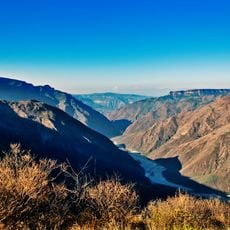
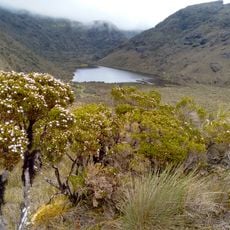
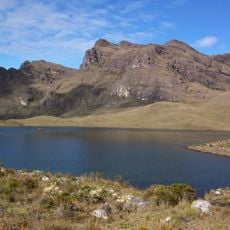
Santurbán is a mountainous massif in the Eastern Cordillera of the Colombian Andes, spanning the departments of Santander and Norte de Santander between 2,800 and 4,290 meters above sea level. Its slopes of grey-brown layered rock and dry yellowish-tan grass descend to dark lakes, while the Northern Lagoon Complex holds 40 lagoons, including Laguna Brava, the largest in the massif.
The Santurbán páramo has drawn regional and national attention for an environmental mining conflict that unfolded in recent years, as mining projects sought to exploit the massif. The Guarguati indigenous people, descendants of the Guaraní who lived here for 500 years, now count few members; social and political leader Brayan Guarguati, great-grandson of landowner Jorge IV Guarguati, heads the defense against extraction.
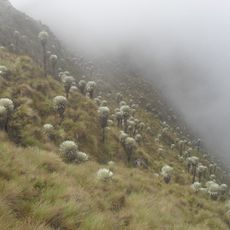
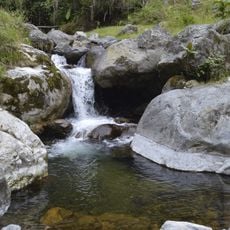
The Colombian term páramo describes a distinct landscape between mountain forest and glacier zone, marked by fog formation and shifting temperatures. Visitors see mossy terrain here with low vegetation and streams running through open ground.
The complex spans roughly 142,000 hectares between 2,800 and 4,290 meters, with about 72% of it in Norte de Santander and 28% in Santander. Rain falls mainly in two wet seasons, April-May and September-November, and minimum temperatures drop below 0 °C. Access is by unpaved roads from municipalities such as Arboledas, Salazar de las Palmas and Mutiscua; the Laguna Brava, 39 hectares of open water, is the largest lake of the unit.
Frailejón plants grow only a few millimeters each year and reach full size only after decades, making them witnesses to long-term climate shifts. Their woolly leaves are covered by thousands of fine hairs that catch fog droplets directly from the air.
The community of curious travelers
AroundUs brings together thousands of curated places, local tips, and hidden gems, enriched daily by 93,344 contributors worldwide.