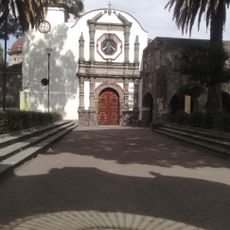
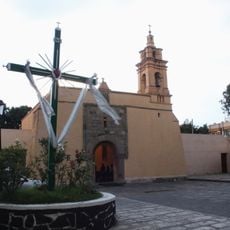
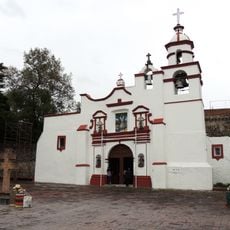
San Marcos Mexicaltzingo Parish, Iztapalapa, Franciscan convent and parish in Iztapalapa, Mexico.
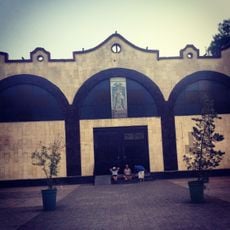
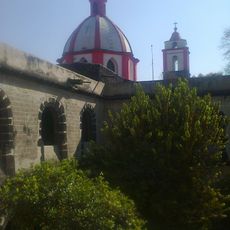
The Templo y exconvento de San Marcos Apóstol is a Franciscan church and former convent begun in 1560 on the main building of the Mexicaltzingo altépetl. Its church has a Latin cross plan, a barrel vault with lunettes, and an octagonal dome without a drum, topped by a small lantern; the portal carries Solomonic columns on its lower level. The convent's former second floor no longer exists.
Franciscan friars built the church in 1560 on the main structure of the Mexicaltzingo altépetl, near a former Mexica dock. The exact founding date is unknown, but the temple appears on the 1555 Uppsala map by Alonso de Santa Cruz. In 1983, re-foundation work inside the church and cloister revealed pre-Hispanic platforms and stairways; in 1991, remains of noble residences were found at the nearby UNITEC campus.
The name Mexicaltzingo comes from Nahuatl and refers to the Mexica settlement whose main temple stood here; the town kept the name of the apostle Mark. The church preserves a Christ image made of cane paste, a lightweight material of Michoacán tradition, and the 1959 closure of the atrium cemetery moved burials into crypts inside the building.
The church stands at the crossing of Calzada de la Viga and Calzada Ermita-Iztapalapa, the spot where the Mexica canal landing once was; the Uppsala map of 1555 already places it there. The former convent had a second floor that no longer exists, so the complex today is smaller than the original missionary layout.
A cane-paste Christ figure kept in the church was found to hold codices with Nahuatl inscriptions inside it, a detail revealed only by analysis of the image. The temple also appears on the 1555 Uppsala map, drawn at the crossing of the Canal de la Viga and the old Iztapalapa causeway.
The community of curious travelers
AroundUs brings together thousands of curated places, local tips, and hidden gems, enriched daily by 93,766 contributors worldwide.