Cerro de la Estrella, Summit in Iztapalapa, Mexico City, Mexico
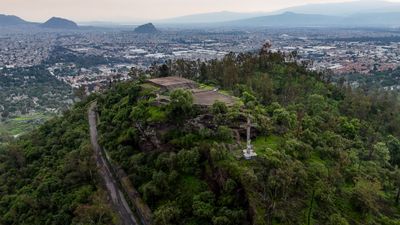
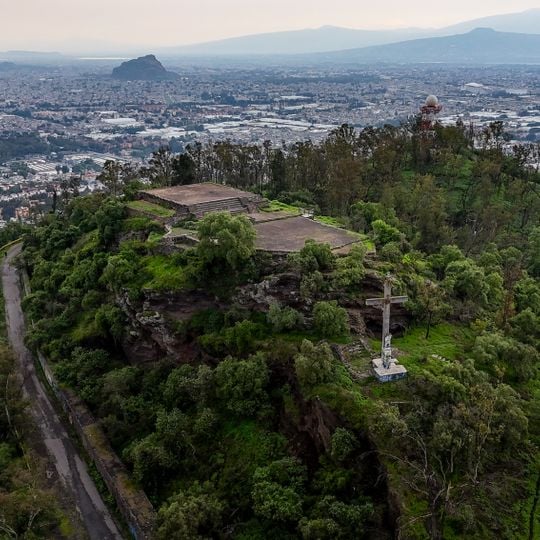
Cerro de la Estrella is a flat-topped hill in Iztapalapa, eastern Mexico City, rising 2,460 meters above sea level, 224 meters above the Valley of Mexico. Its summit holds a rectangular plaza of pale stone bordered by a low stepped platform, with a tall stone cross on a square base below the edge. A paved road runs along its lower left flank.
Human settlements on the site date back to around 1000 BC, with structures built by various Mesoamerican civilizations. The Culhuacan and later the Mexicas used the mountain as a center for their most important religious ceremonies.
The hill's Nahuatl name, Huizachtepetl, refers to the huizache, a sweet acacia growing on its slopes. Priests climbed to the summit every 52 years to light the New Fire; four ceremonies are recorded, in 1351, 1403, 1455 and 1507. During Holy Week the hill serves as Mount Golgotha in Iztapalapa's Passion of Christ, which draws over a million people each year.
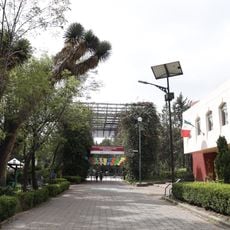
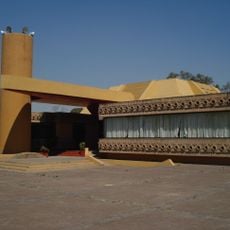
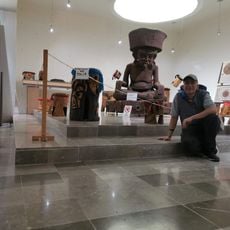
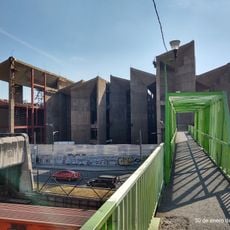
The mountain is accessible to visitors on foot through well-marked trails that lead from the base to the summit. The museum at the entrance provides background information and serves as a helpful starting point before climbing.
The hill's Nahuatl name, Huizachtepetl, means "hill of the huizache", the sweet acacia that grows on its slopes. The last New Fire ceremony recorded here took place in 1507; the next, due in 1559, never happened because Tenochtitlan fell in 1521.
The community of curious travelers
AroundUs brings together thousands of curated places, local tips, and hidden gems, enriched daily by 94,515 contributors worldwide.