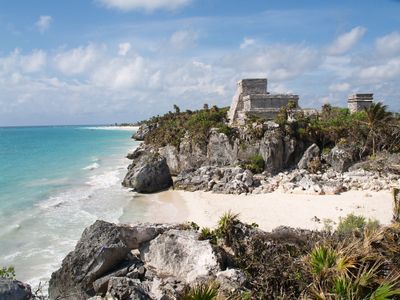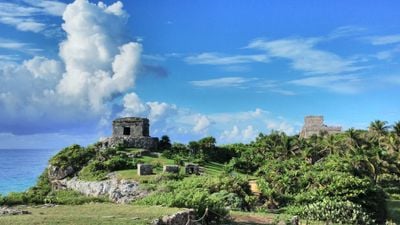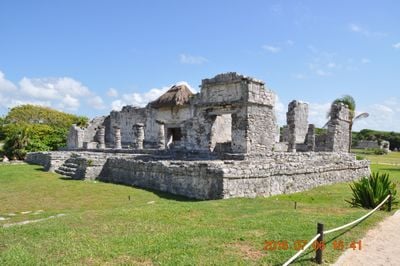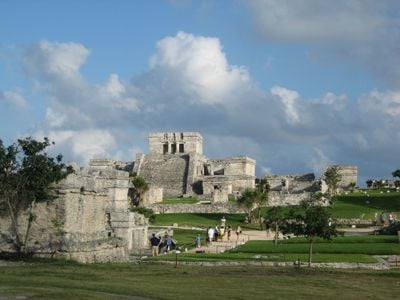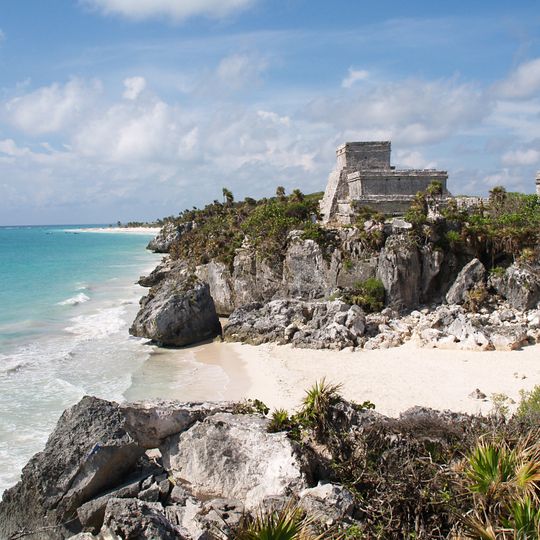
Maya Ruins of Tulum, Mayan archaeological site at the Caribbean coast, Mexico.
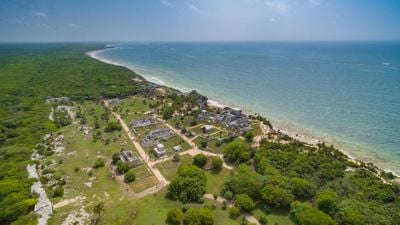
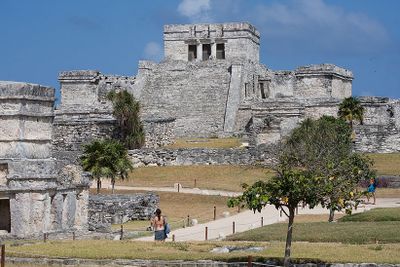
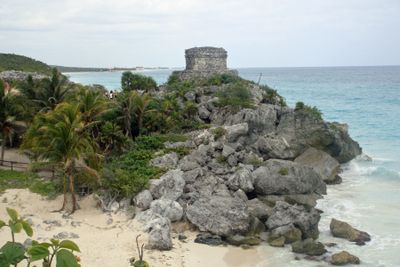
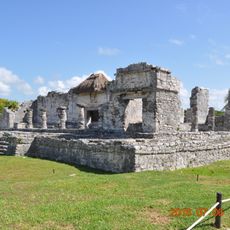
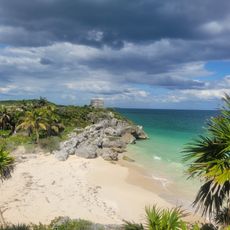
The ruins of Tulum form an archaeological site on the Caribbean coast in the state of Quintana Roo, where gray stone structures rise on a limestone cliff roughly twelve meters above the water. A continuous wall with several openings surrounds the grounds and separates the complex from the surrounding jungle, while watchtowers and temple buildings are scattered across the platform behind it.
Between 1200 and 1450, this location served as a major trading port that connected sea routes along the coast with inland routes across the Yucatán Peninsula. After Spanish arrival in the 16th century, the settlement was gradually abandoned and overtaken by jungle until explorers documented it again in the early 19th century.
Visitors today gather near the eastern edge to watch the sunrise over the water, while local guides share stories about how the buildings aligned with the movements of the sun and moon. Just outside the walls, vendors sell handmade crafts and woven textiles that echo designs from the period, reflecting the ongoing connection to ancestral traditions.
The site is best visited early in the morning before heat and crowds build up, as there is little shade on the open platforms. Pathways are mostly level, though some sections cross uneven stones and steep steps, so sturdy footwear is recommended.
One small temple displays a carved figure hanging upside down, interpreted as the descending god, whose position aligns with the path of Venus across the sky. In two niches on the same facade, stucco figures once stood but have disappeared, though early photographs from the 19th century show them intact.
The community of curious travelers
AroundUs brings together thousands of curated places, local tips, and hidden gems, enriched daily by 90,857 contributors worldwide.