Muyil, Archaeological site in Quintana Roo, Mexico.
Muyil is a Maya archaeological site in Quintana Roo, Mexico, built in the Peten style with steep-walled pyramids resembling those of Tikal. Its structures include a stepped stone pyramid with a wide staircase and a tall tower-like upper section with small dark openings, set on flat sandy ground among trees.
Artifacts found at Muyil date from as early as 350 BC and the site remained inhabited until 1200–1500 AD. It was possibly occupied by the Itzaes, who migrated from the Guatemalan Petén northward around the 4th century AD. Muyil lay on a Caribbean trade route served by canals, and it maintained strong ties with Cobá, about 44 km to the north/northwest.
The name Muyil is not Maya for water; the nearby Sian Ka'an lagoon means "Where the Sky is Born." The site is also called Chunyaxché. Traders moved jade, obsidian, chocolate, honey, feathers, chewing gum and salt along canals, and Muyil had close ties with Cobá, about 44 km to the north-west.
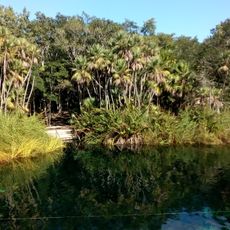
The site lies within the Sian Ka'an Biosphere Reserve and is surrounded by dense forest, so wear comfortable shoes and bring plenty of water. Visiting early in the morning is best, as it is cooler and less crowded.
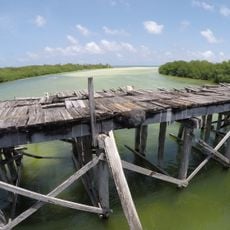
The grounds contain a network of ancient canals and waterways built by the Maya for trade, parts of which are still visible today. These water routes reveal how carefully the Maya planned their infrastructure.
The community of curious travelers
AroundUs brings together thousands of curated places, local tips, and hidden gems, enriched daily by 94,007 contributors worldwide.