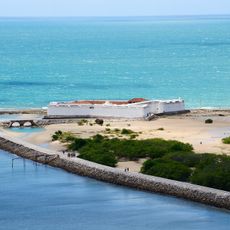
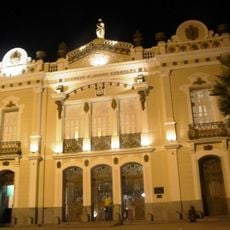
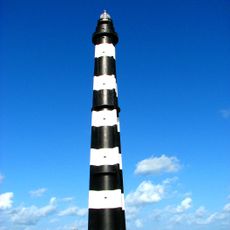
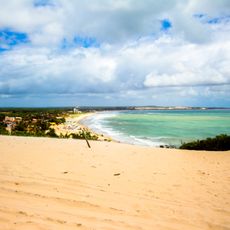
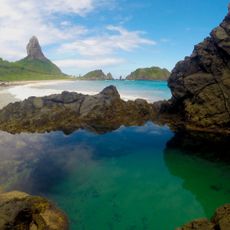
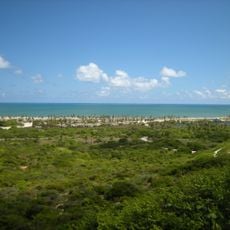
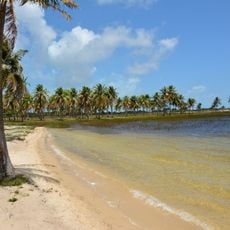
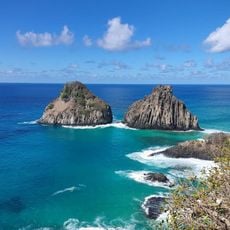
Atol das Rocas Biological Reserve, Biological reserve and Ramsar site in Rio Grande do Norte, Brazil.
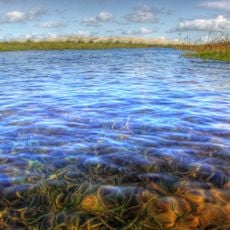
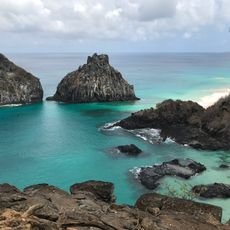
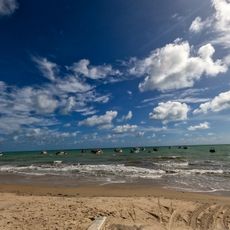
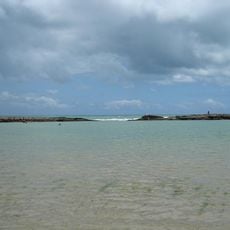
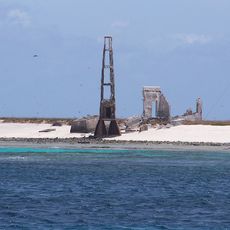
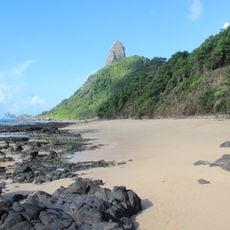
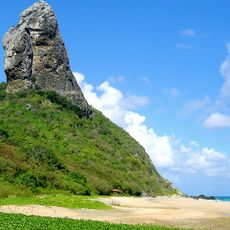
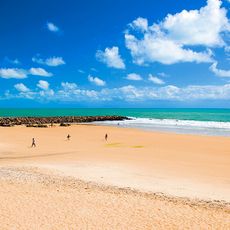
Atol das Rocas is a coral atoll built on a volcanic seamount 266 km northeast of Natal, Brazil. Its reef forms an ellipse about 3.7 by 2.5 km, enclosing a lagoon with two islands, Ilha do Farol (3.5 ha) and Ilha do Cemitério (3.2 ha). The highest point is 3 m above sea level.
Brazil established this protected area in 1979 to preserve marine ecosystems and protect nesting sites for sea turtles and seabirds. The decision came from recognizing that these remote islands held rare ecological value and faced serious threats.
The reserve is a strict nature reserve under IUCN category Ia, managed by the Chico Mendes Institute for Biodiversity Conservation, so no direct human interference is allowed beyond restoring altered ecosystems. Its name comes from the Portuguese word for the atoll's rock-like reef. Since 2015 it has been listed as a Ramsar site, and in 2001 it was inscribed with Fernando de Noronha as a UNESCO World Heritage Site.
Access is strictly limited because only authorized researchers are permitted to enter the area to protect its ecosystems. Visitors cannot land on the islands but can view the reserve from a distance by boat or learn about it through educational programs.
Rocas is the only atoll in the South Atlantic, and an estimated 143,000 birds use it, mainly masked boobies, brown boobies, brown noddies, black noddies and sooty terns. BirdLife International designated it an Important Bird Area for these seabird colonies. The reserve also protects loggerhead, hawksbill and green sea turtles.
The community of curious travelers
AroundUs brings together thousands of curated places, local tips, and hidden gems, enriched daily by 94,546 contributors worldwide.