Cape Romano, Cape in Ten Thousand Islands, Florida, US
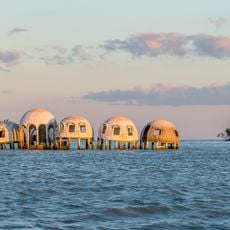
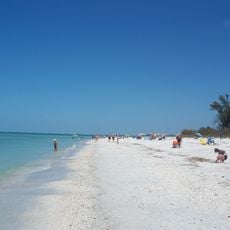
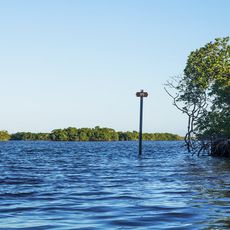
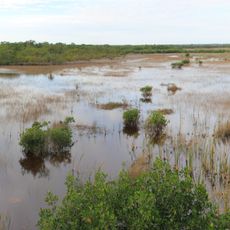
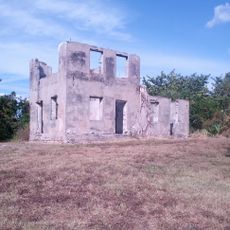
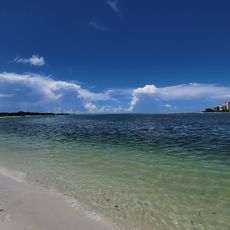
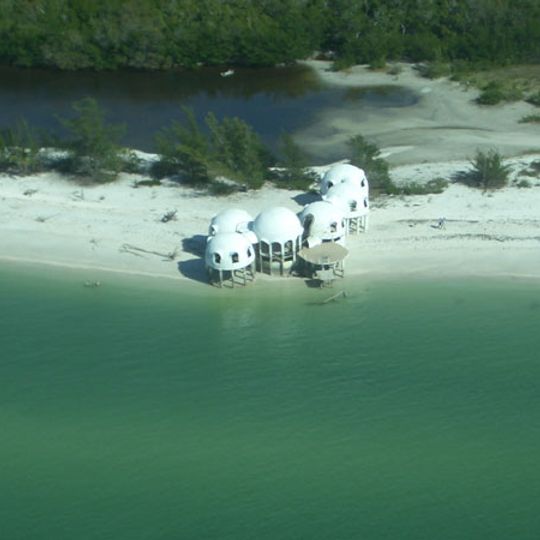
Cape Romano is a cape at the southern end of Caxambas Island, just south of Marco Island and northwest of the Ten Thousand Islands chain, in Collier County, Florida. It lies on Cape Romano Island, part of the Kice-Morgan Island group, where narrow barrier beaches stand in front of large mangrove forests. The Cape Romano Dome House, a group of white dome-shaped structures, once stood on the beach here; erosion left it in open water and hurricanes have since washed it away.
Bernard Romans charted and named this geographical formation in 1774, recording it on his maps of East and West Florida. His naming of the location established its identity and made it known on European maritime charts.
Cape Romano may be the site of Muspa, a town of the Calusa, a sub-chiefdom of that people; one Spanish map named the cape Punta de Muspa, and descriptions of the town's location fit the cape. John Lee Williams reported plantations near Caxambas Bay in 1837, which led Charlton Tebeau to suggest one may have stood at the cape. A military expedition camped here in 1838 at the site of a former settlement and found fresh water.
Access to Cape Romano is only by boat or kayak from Marco Island, as no roads reach this remote coastal location. Visitors should be familiar with tidal cycles and check the weather forecast before heading out on these waters.
The white dome house visible offshore was built on Cape Romano in the early 1980s; beach erosion left it standing in open water, and hurricanes have since broken it apart. Joe Dickman lived on the cape as a hermit from the 1930s until the 1960s.
The community of curious travelers
AroundUs brings together thousands of curated places, local tips, and hidden gems, enriched daily by 93,890 contributors worldwide.