Hampton Plantation, Georgian plantation in Charleston County, United States.
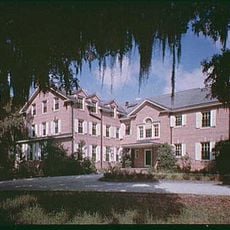
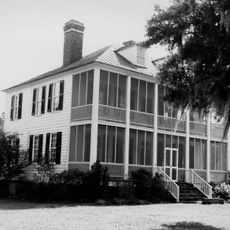
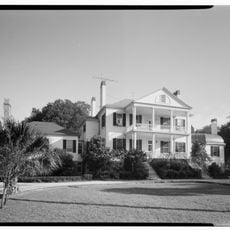
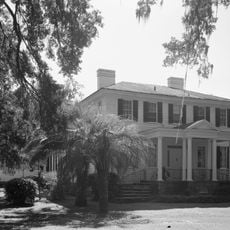
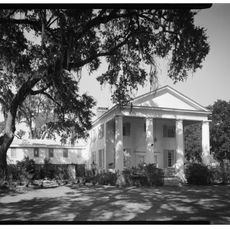
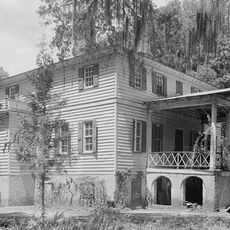
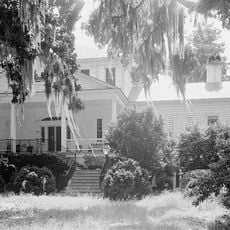
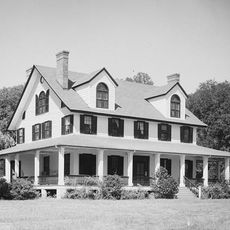
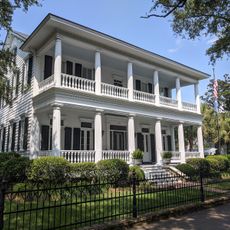
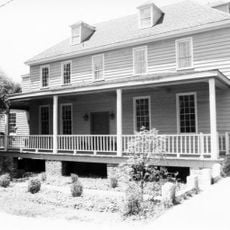
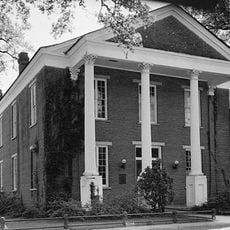
Hampton Plantation is a 2+1⁄2-story wood-frame house near Hampton Creek, built on a raised brick foundation with clapboard siding and a dormered hip roof. Its projecting temple front, added in 1790–91, has eight Doric columns (six across, two on the sides) beneath a carved Adamesque frieze and pedimented gable. Three brick chimneys rise from the roof.
Hampton Plantation was established in 1735 by Noe Serre, a French Huguenot refugee, as a central-hall two-story house. Daniel Horry acquired it in 1757 and expanded it with a ballroom and master bedroom suite, adding false shuttered windows for symmetry. The temple-front portico was added in 1790–91, in time for George Washington's visit. The state purchased the property from the Rutledge family in 1971.
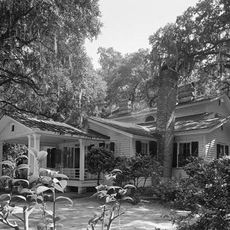
Archibald Rutledge, South Carolina's first poet laureate, returned to Hampton in 1937 after thirty-three years away and wrote about the restoration in his 1941 book Home by the River. The novelist Pat Conroy met Rutledge here as a teenager and later recalled their conversations about writing and the plantation's history.
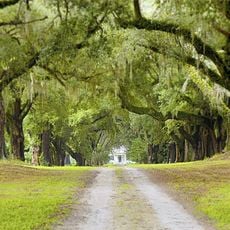
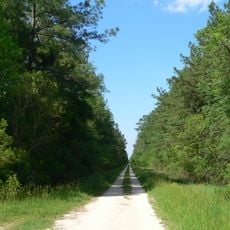
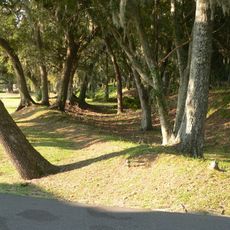
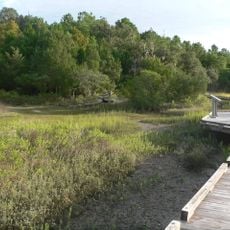
The state historic site lies just under 300 acres on the banks of Hampton Creek, west of US Route 17 north of McClellanville. Most former plantation land has reverted to woods and swamp, so stay on marked paths and expect wet, uneven ground near the creek. The house is reached on foot from the parking area.
The house's temple front, added in 1790–91, is believed to be the first of its type in the United States. It was completed in time for a visit by George Washington. The columns are Doric, and the pediment carries a decoratively carved Adamesque frieze.
The community of curious travelers
AroundUs brings together thousands of curated places, local tips, and hidden gems, enriched daily by 92,894 contributors worldwide.