Wedge Plantation, Plantation house in Charleston County, South Carolina, USA
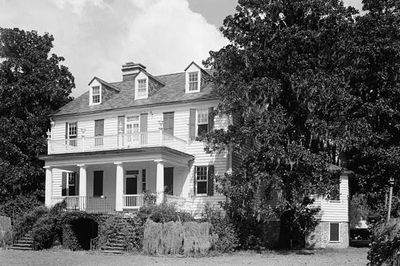
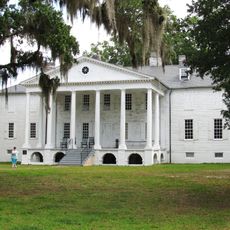
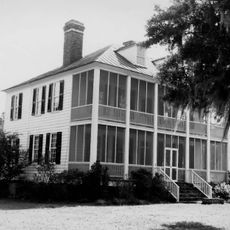
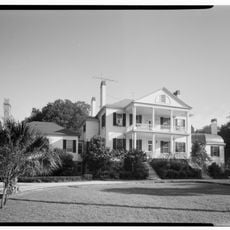
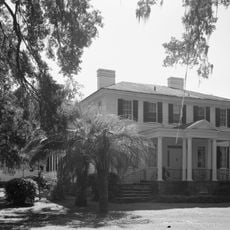
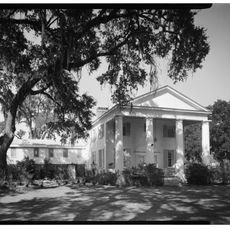
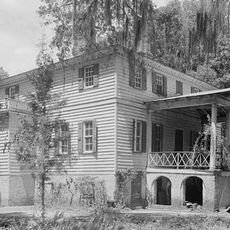
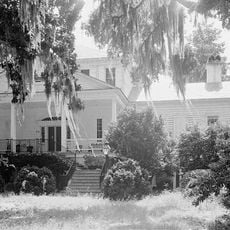
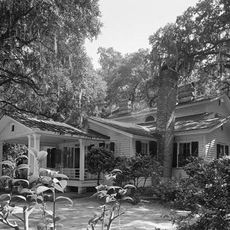
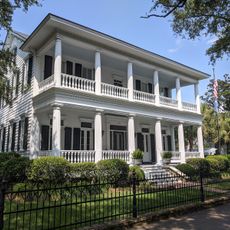
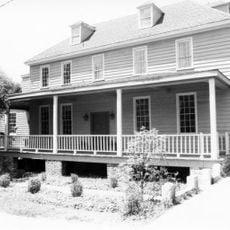
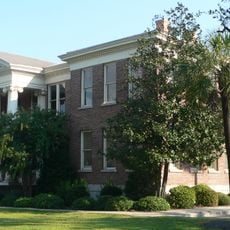
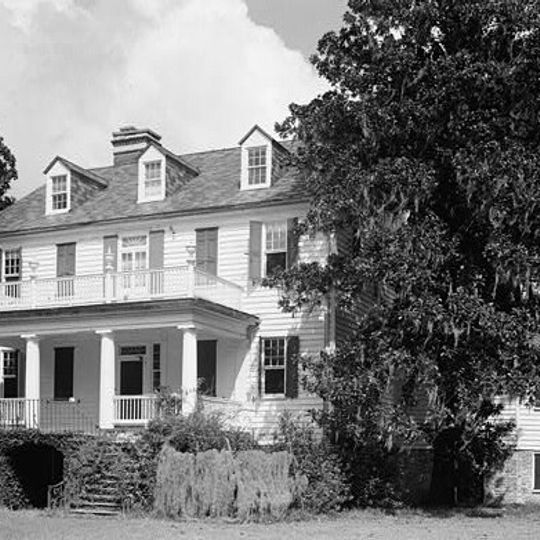
Wedge Plantation is a Federal-style clapboard house on a raised basement, built around 1826 near McClellanville, South Carolina. The 2+1/2-story rectangular house has a gable roof with dormers, a portico on four fluted Doric columns, and a pediment with a semi-elliptical window. Horseshoe stairs of granite with an iron railing lead to the porch, and a semicircular archway opens into the basement.
William Lucas, son of rice-mill inventor Jonathan Lucas, built the house around 1826 and ran it as a rice plantation until about 1914. After changing hands several times, it was listed on the National Register of Historic Places on September 18, 1975.
The house reflects how wealthy planters lived during the early 1800s, with its Federal style and classical details expressing the tastes and status of its owner at that time. The site represents a way of life centered on agricultural production that shaped the region's identity.
The house is located about five miles east of McClellanville and is privately owned, so visits are not always available. Check in advance if access is possible and respect the property owners' privacy when approaching the site.
Dr. Richard B. Dominick, an owner during the 1960s and 1970s, collected thousands of moths and butterflies on the grounds, a collection now housed at the University of South Carolina. His interest in insects turned the plantation into a research center for studying insect-borne diseases.
The community of curious travelers
AroundUs brings together thousands of curated places, local tips, and hidden gems, enriched daily by 92,784 contributors worldwide.