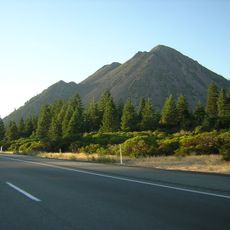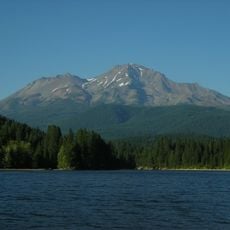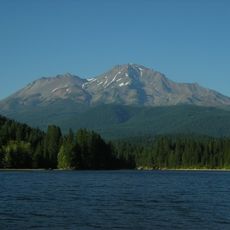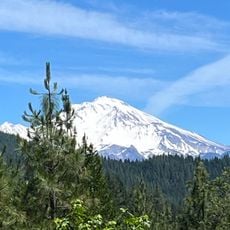
Mount Shasta, Stratovolcano in Siskiyou County, California, United States
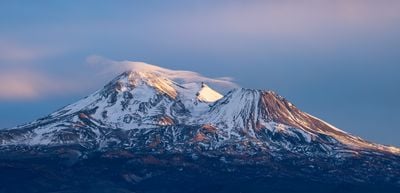
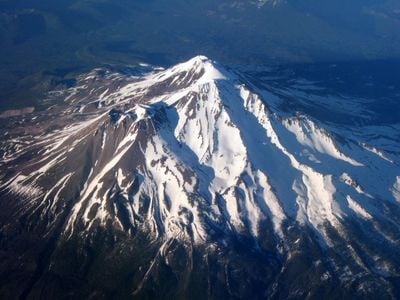
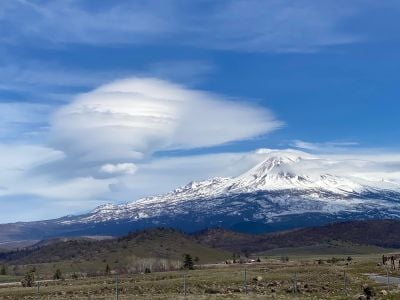
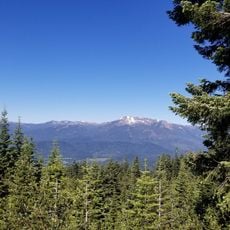
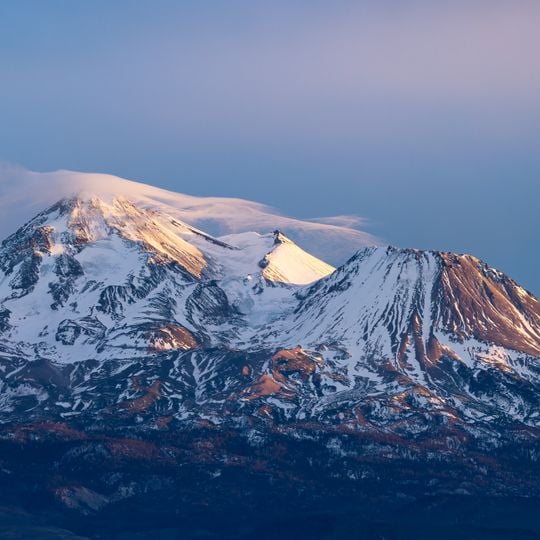
Mount Shasta rises to 4,322 meters above sea level as a prominent stratovolcano with four overlapping volcanic cones, seven named glaciers, and steep slopes covered in snow and ice throughout most of the year.
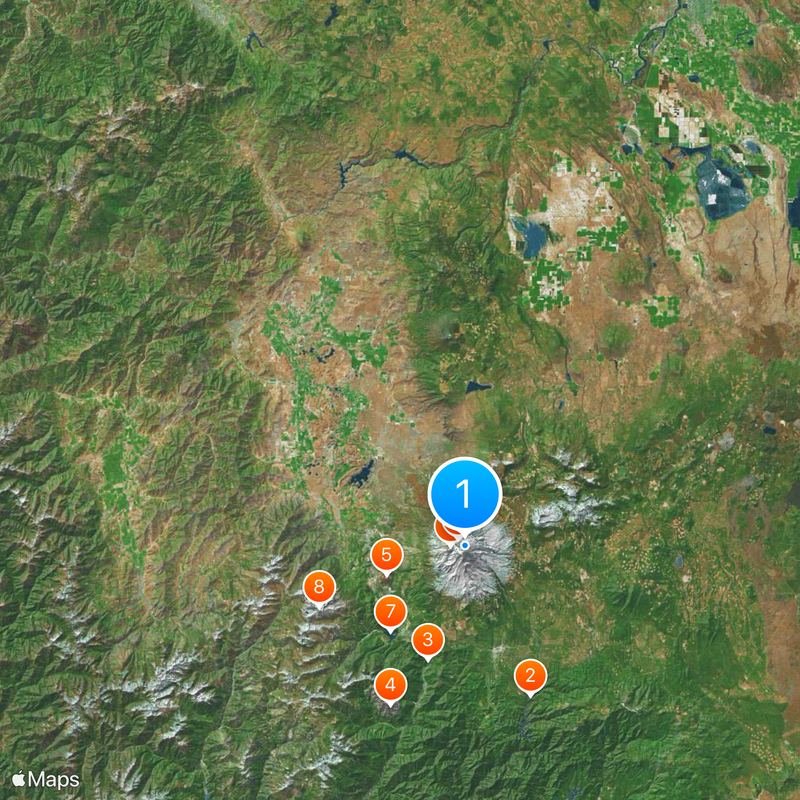
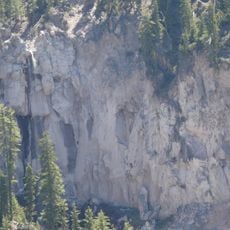
Mount Shasta grew from andesitic lavas erupted about 593,000 years ago. Between 300,000 and 360,000 years ago the entire north side collapsed in a debris avalanche of 6.5 cubic miles that flowed northwest into Shasta Valley, where the Shasta River now cuts through the 28-mile-long deposit. The last major eruption was about 3,000 years ago, with minor eruptions as recently as 200 years ago.
Native American tribes including the Shasta, Karuk, Modoc, and Wintu consider the mountain sacred and have inhabited the surrounding area for over 7,000 years, while modern spiritual movements regard it as a center of mystical energy.
Climbing permits are required but not quota-restricted, with the Avalanche Gulch route being the most popular access path, though visitors must prepare for alpine conditions and potential volcanic hazards monitored by the USGS.
About 300,000 to 360,000 years ago the entire north side of the volcano collapsed, sending a debris avalanche of roughly 6.5 cubic miles northwest into Shasta Valley, where the Shasta River now cuts through a 28-mile-long flow. It is the largest such collapse identified worldwide.
The community of curious travelers
AroundUs brings together thousands of curated places, local tips, and hidden gems, enriched daily by 92,237 contributors worldwide.