Hug Point State Recreation Site, State recreation area on the Pacific coast in Oregon, United States
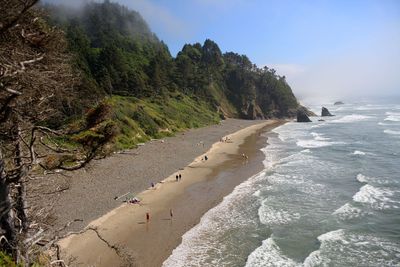
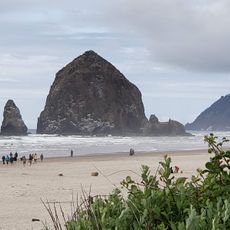
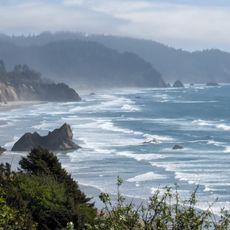
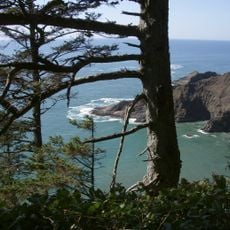
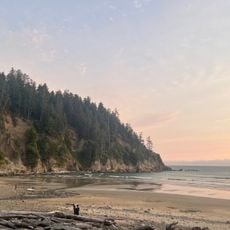
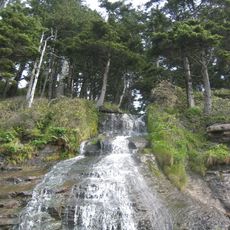
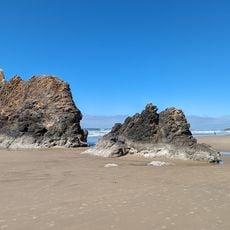
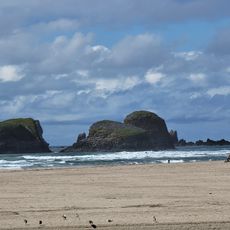
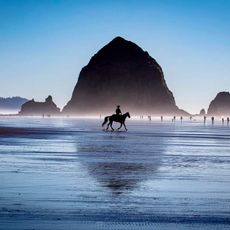
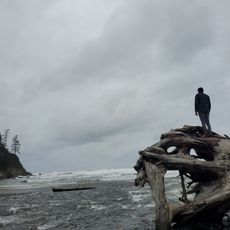
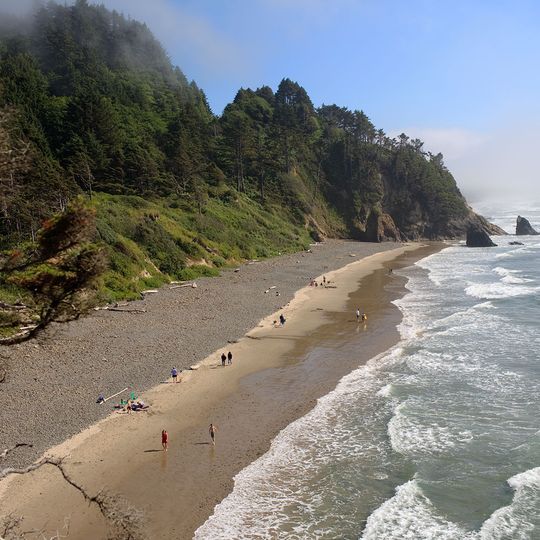
Hug Point State Recreation Site is a 43-acre park where a broad beach of grey and brown pebbles above and smooth tan sand below slopes gently to the surf. Dark driftwood logs lie on the upper beach, and a steep forested slope borders it on the left. Sandstone cliffs on the south side of the headland hold erosion-formed caves and a seasonal waterfall.
Stagecoaches using the beach as a highway in the late 19th century had to hug this cape even at low tide, which gave the site its name. Around 1900, a primitive roadbed was chipped into the headland to ease access to Arch Cape, then reachable only by driving on the beach. A rumor attributing the roadbed to a Maxwell car stuck in the 1920s is contradicted by photographs showing the road existed well before 1920.
The name comes from stagecoach drivers who had to "hug" the cape to pass at low tide. The roadbed chipped into the headland around 1900 let wagons and early cars reach Arch Cape, and a stage driver interviewed by historian Ralph Friedman recalled using it before World War I.
Plan your visit around low tide to safely explore the caves and navigate the narrow sections. Parking and restroom facilities are available at the trailhead and throughout the site.
In 2024 Hug Point was where the first Blue rock thrush ever recorded in the United States was seen; the bird is native to Asia and Europe. Birders travelled to this beach south of Cannon Beach after the news spread.
The community of curious travelers
AroundUs brings together thousands of curated places, local tips, and hidden gems, enriched daily by 92,880 contributors worldwide.