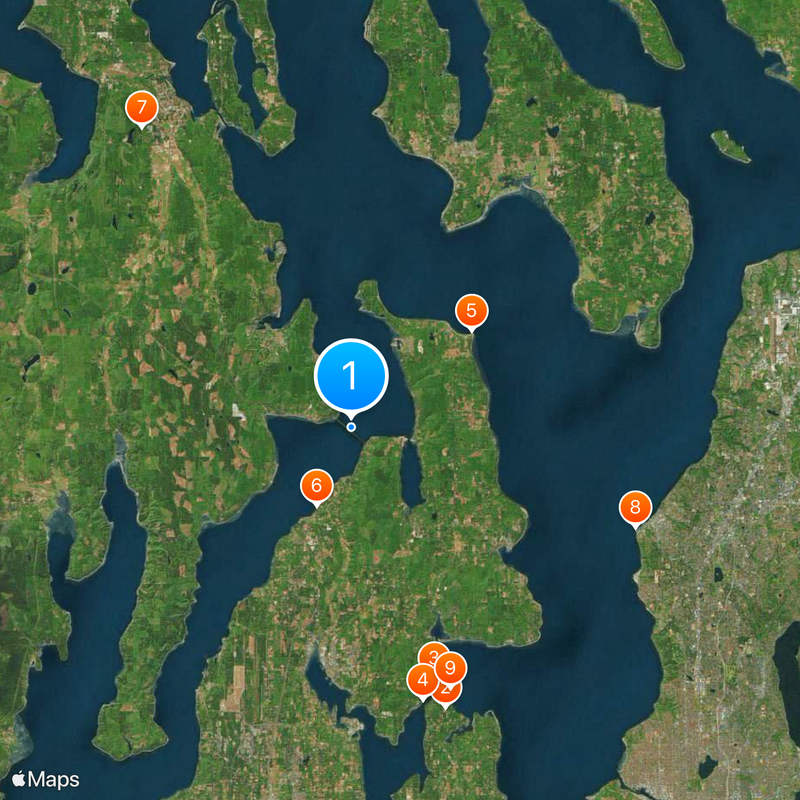
Hood Canal Bridge, Pontoon bridge between Kitsap and Olympic Peninsula, United States
Hood Canal Bridge spans 2,398 meters (7,869 feet) across the saltwater tidal basin, using 23 concrete pontoons that support vehicle traffic between two peninsulas. The floating structure connects the Kitsap Peninsula to the Olympic Peninsula across one of the busiest waterways in the Pacific Northwest.
A major failure occurred during a 1979 storm when winds reaching 120 miles per hour (190 kilometers per hour) caused the western section to sink. Reconstruction took three years and resulted in an improved design with stronger anchoring systems.
The Klallam village of Tse-whit-zen, occupied for about 2,700 years, was uncovered in 2003 during work on dry docks for the bridge's new pontoons near Port Angeles. The state abandoned the dry-dock plan in late 2004 after the discovery, and the site was excavated and artifacts recovered.
Washington State Department of Transportation closes the crossing to vehicles when wind speeds exceed 40 miles per hour (64 kilometers per hour) for more than 15 minutes. Travelers should check weather forecasts and consider alternate routes when storms are predicted.
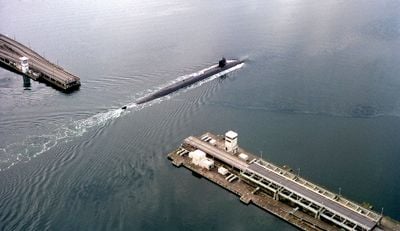
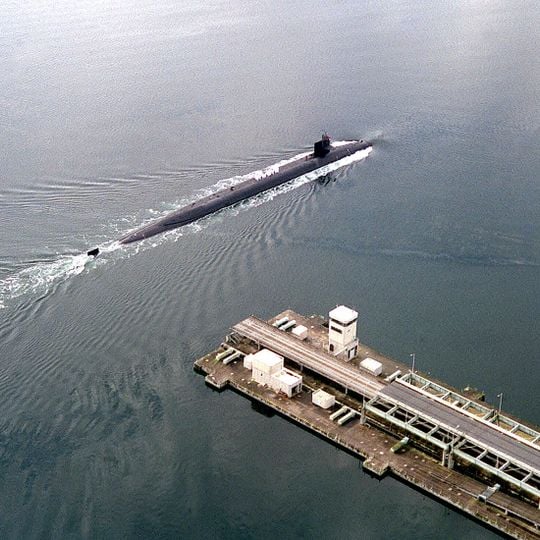
The bridge's 23 pontoons are bolted into two continuous hulls, each weighing about 5,000 tons, and held by steel cables to 42 concrete anchors of 500 tons each on the seabed. The 180-meter navigation opening is used by Ohio-class submarines heading to Naval Base Kitsap. To open it, the road segments next to the drawspan are raised 2 meters and the drawspan is pulled back beneath them.
The community of curious travelers
AroundUs brings together thousands of curated places, local tips, and hidden gems, enriched daily by 93,774 contributors worldwide.