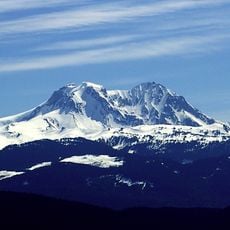
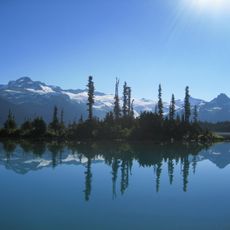
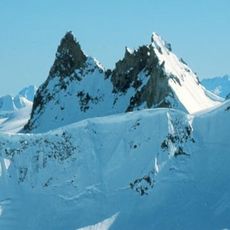
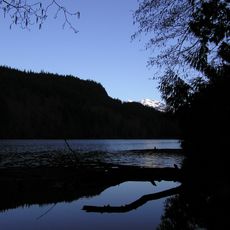
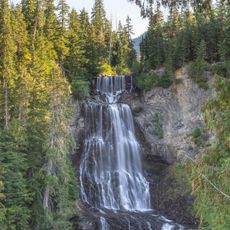
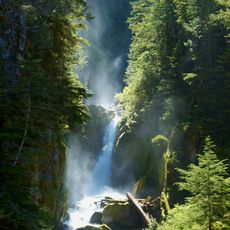
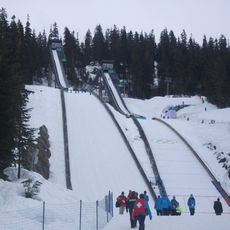
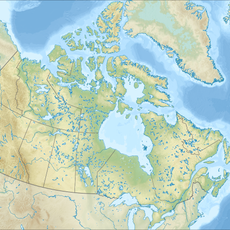
Mount Cayley, Stratovolcano in Pacific Ranges, British Columbia, Canada.
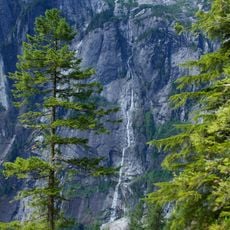
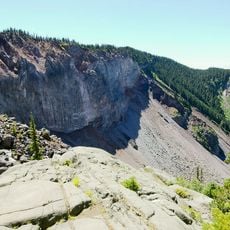
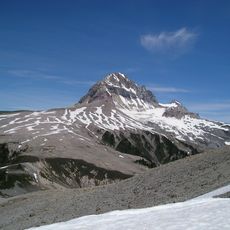
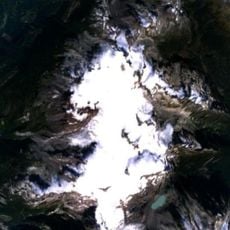
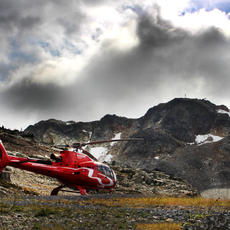
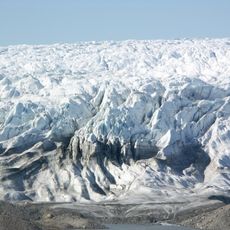
Mount Cayley is an eroded stratovolcano built mainly of dacite and rhyodacite lava and ash. Its massif has three summits: Mount Cayley at 2,385 m, Pyroclastic Peak at 2,341 m with the rock pinnacle Vulcan's Thumb, and Wizard Peak at 2,240 m. A cliff over 500 m high rises above Turbid Creek valley, and the northeastern flank meets the 9 km long Powder Mountain Icefield.
Mount Cayley formed through three eruptive stages beginning about 4,000,000 years ago, with the Mount Cayley and Vulcan's Thumb stages building most of the edifice. After a 300,000-year quiescence, the Shovelnose stage emplaced parasitic domes and flows roughly 300,000 to 200,000 years ago. The mountain was named for Beverley Cochrane Cayley, who died on 8 June 1928, months before the first ascent in September 1928.
The Squamish people know this mountain by a name connected to a sacred bird, reflecting its importance in their traditions. This relationship with the land has been part of their stories passed down through time.
Reaching this peak demands advanced mountaineering skills and proper equipment due to its remote location north of Squamish. Visitors should prepare for alpine conditions and expect difficult, exposed terrain throughout the climb.
The Squamish name for the mountain, t'ak'takmu'yin tl'a in7in'a'xe7en, means "landing place of the thunderbird". The peak was mapped only in the 1980s, and its eastern flank above the Powder Mountain Icefield keeps it hard to reach for hikers and climbers.
The community of curious travelers
AroundUs brings together thousands of curated places, local tips, and hidden gems, enriched daily by 93,078 contributors worldwide.