Mount Fee, Mountain summit in British Columbia, Canada
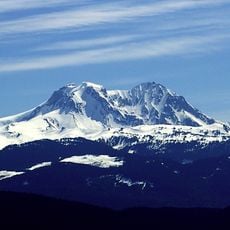
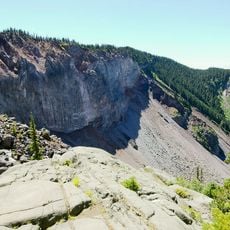
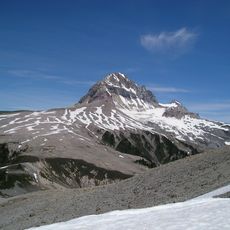
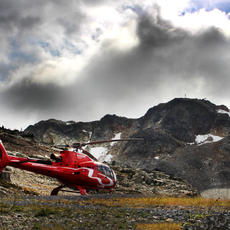
Mount Fee is a narrow north–south ridge of fine-grained volcanic rock in the Pacific Ranges of the Coast Mountains, 21 km west of Whistler. It is 1.5 km long and 0.5 km wide, with nearly vertical flanks and two main summits separated by a U-shaped crevice; the southern tower is the highest at 2,162 m.
Mount Fee is among the oldest volcanoes in the Mount Cayley volcanic field. Its rocks are undated, but heavy dissection and evidence of glacial ice overriding the edifice indicate it formed more than 75,000 years ago, before the Wisconsinan Glaciation. At least three eruptive phases are recognised: an early explosive event leaving a minor pyroclastic outcrop, lava flows and broken fragments on the eastern flank, then viscous lavas on the northern flank whose conduit now separates the two summits.
Glassy rhyodacite from Mount Fee's flanks was collected by Indigenous peoples to make knives, chisels and adzes before Europeans arrived in the 18th century. This material appears at goat hunting sites and the Elaho rockshelter, dated from about 100 to 8,000 years ago. In September 1928 the peak was named by mountaineer Tom Fyles after Charles Fee (1865–1927) of the British Columbia Mountaineering Club.
Weather can shift rapidly, so warm layers are essential given the temperature swings across seasons. Access depends on conditions, and visitors should arrive well-equipped and prepared to handle the terrain.
The mountain extends 1.5 kilometers in length and 0.5 kilometers in width, featuring steep vertical flanks characteristic of eroded volcanic structures.
The community of curious travelers
AroundUs brings together thousands of curated places, local tips, and hidden gems, enriched daily by 93,371 contributors worldwide.