Telescope Array Project, Gamma-ray telescope in Millard County, United States
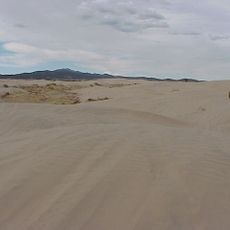
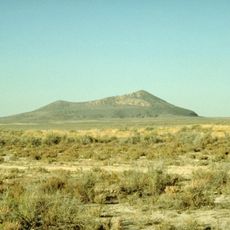
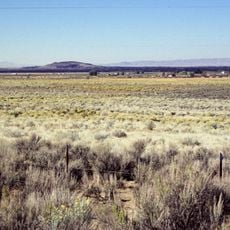
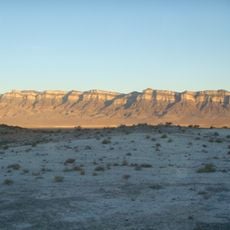
The Telescope Array Project is a cosmic-ray observatory in Millard County, Utah, with 507 scintillation surface detectors spaced 1.2 km apart across 762 km². Three fluorescence stations at Black Rock Mesa, Long Ridge and Middle Drum, each with 12–14 telescopes, view the night sky above the array, and a Central Laser Facility at the array's centre handles atmospheric calibration.
The facility was created by combining a Japanese observation system from the 1990s with the American Fly's Eye telescope, which operated in Utah from 1981 to 1993. This merger of two pioneering projects created a powerful installation for studying the most energetic particles from space.
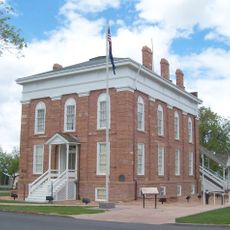
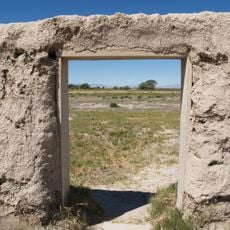
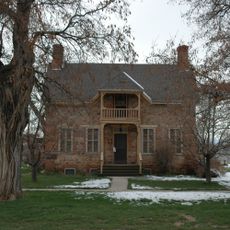
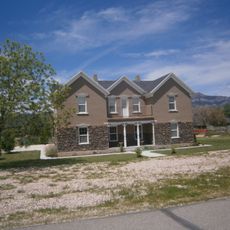
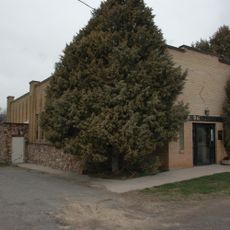
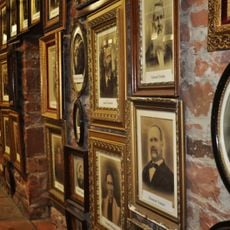
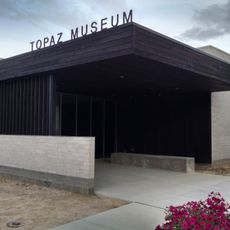
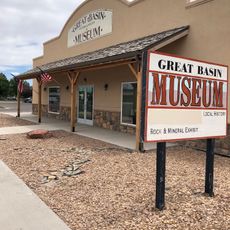
The Lon and Mary Watson Millard County Cosmic Ray Center, dedicated on March 20, 2006, at 648 West Main Street in Delta, serves as the project's headquarters and data-processing base. Its visitor center, opened in October 2011, holds displays on the history of cosmic ray research in Utah and on the nearby Topaz internment camp, where U.S. citizens of Japanese descent were imprisoned during World War II.
The detectors sit on a 762 km2 grid in Millard County's high desert at about 1,400 m elevation, with 1.2 km between units, so the array is not walkable as a whole. The visitor center is separate, at the Lon and Mary Watson Millard County Cosmic Ray Center, 648 West Main Street in Delta, where displays cover the project and the Topaz internment camp.
In 2023, the facility recorded a particle with one of the highest energies ever measured on Earth, showing that the universe holds far more powerful cosmic energy sources than previously thought. This discovery helps scientists push the boundaries of our understanding of physical forces.
The community of curious travelers
AroundUs brings together thousands of curated places, local tips, and hidden gems, enriched daily by 93,789 contributors worldwide.