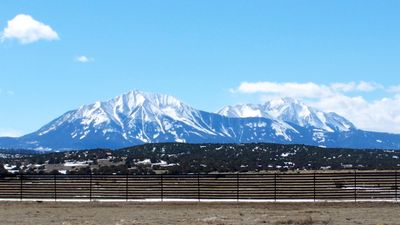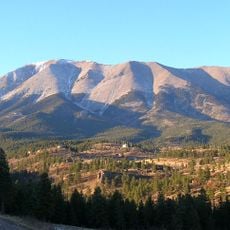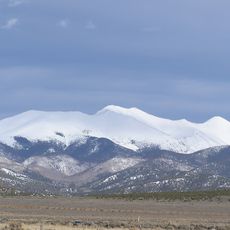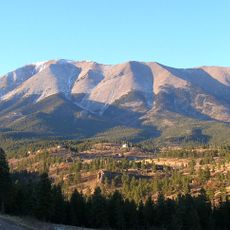
Spanish Peaks, National Natural Landmark in southern Colorado, US
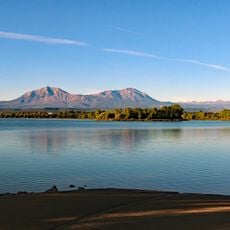
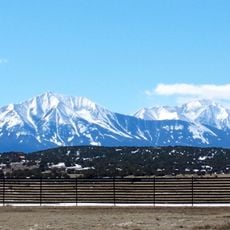
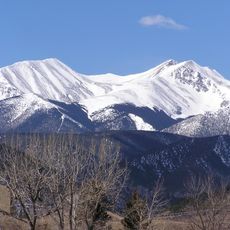
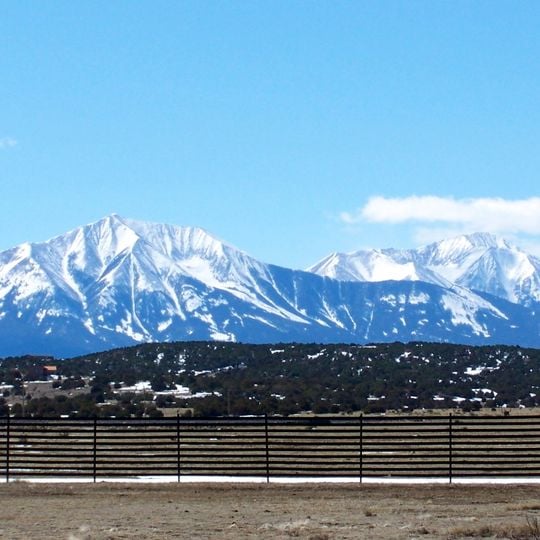
The Spanish Peaks are two mountains in southwestern Huerfano County, Colorado, east of the Culebra Range. West Spanish Peak, the higher summit at 13,631 feet (4,155 m), is a quartz syenite intrusion; East Spanish Peak reaches 12,688 feet (3,867 m) and is granodiorite porphyry ringed by granite porphyry. Both are higher than any point farther east in the United States.
The peaks were a landmark on the Santa Fe Trail, the first sight of the Rocky Mountains for travelers heading west. Lewis Garrard described the route in his 1840s book Wah-to-yah and the Taos Trail. The two peaks formed as separate shallow igneous intrusions in the Late Oligocene: West Spanish Peak, quartz syenite dated to about 24.6 million years ago, and East Spanish Peak, granodiorite porphyry about 23.4 million years old. They were designated a National Natural Landmark in 1976.
The Comanche name Huajatolla, pronounced wah-hah-TOY-ə, means "double mountain". Lewis Garrard used the spelling Wah-to-yah in his 1840s account of travel on the Taos Trail, a book that carries the peaks' name in its title.
The Spanish Peaks Wilderness covers 17,855 acres (72 km2) around both summits, and hiking is the main activity there. The peaks rise above 12,600 feet (3,850 m), so allow for altitude and start early; storms build through the day. The massif is about 100 miles (160 km) south of Colorado Springs, with Raton, New Mexico, 65 miles (105 km) to the south.
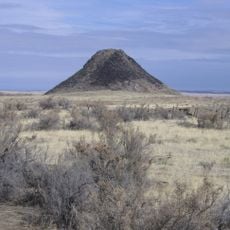
More than 500 volcanic rock dikes radiate from the peaks like geometric lines cutting through the surrounding landscape. These distinctive structures formed when molten rock filled cracks in the earth's crust and then hardened.
The community of curious travelers
AroundUs brings together thousands of curated places, local tips, and hidden gems, enriched daily by 93,788 contributors worldwide.