Ninemile Canyon, Canyon and archaeological site in Carbon and Duchesne counties, Utah, United States
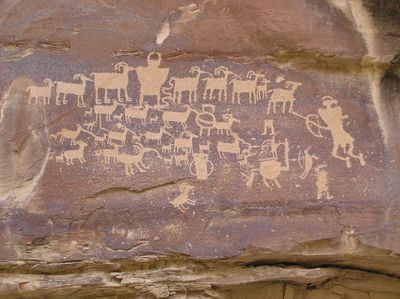
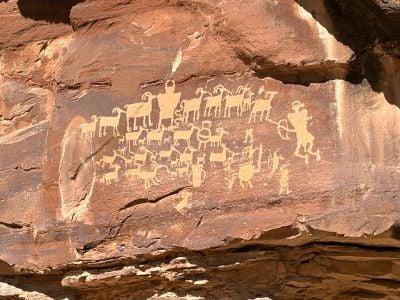
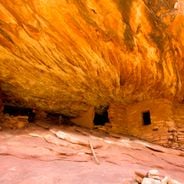
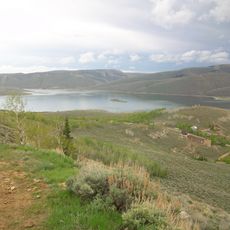
Ninemile Canyon is a roughly 40-mile-long valley in Utah renowned for one of the world's largest collections of rock art created by ancient peoples. A maintained road winds through the terrain, allowing visitors to view thousands of carved and painted images along with remnants of old dwellings and structures built into the canyon walls.
The valley was home to successive peoples over thousands of years, with the Fremont culture particularly active between 950 and 1250 AD, creating extensive rock art and building structures. Following the Fremont period, later groups including the Ute continued to inhabit and use the canyon lands.
The rock art displays varied styles reflecting how different peoples across the centuries expressed their beliefs and daily experiences through images on stone. Walking along the canyon, visitors can observe these distinct artistic traditions side by side, showing how successive groups inhabited and used this landscape.
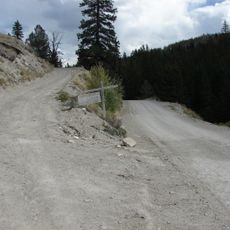
Access is via a maintained road suitable for vehicles, with pullouts and viewing areas along the route to see the rock art and structures. Bring sturdy shoes and water, as the remote location has limited services and the terrain can be uneven when walking to view the artworks up close.
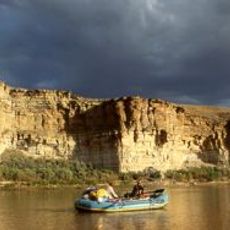
The name Nine Mile Canyon first appears in records of John Wesley Powell's second Colorado River expedition, which camped at the canyon mouth in 1871. The canyon's length is about 40 miles, so the name refers to the old unimproved road of the 19th century rather than the canyon itself.
The community of curious travelers
AroundUs brings together thousands of curated places, local tips, and hidden gems, enriched daily by 94,022 contributors worldwide.