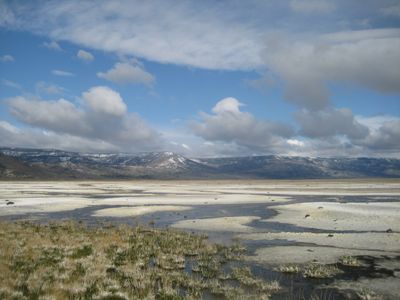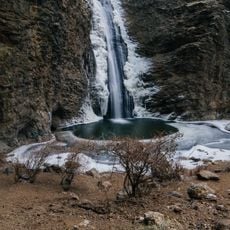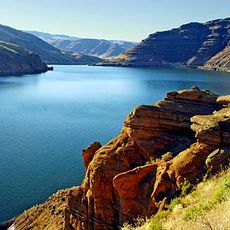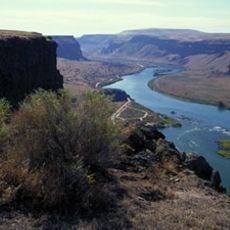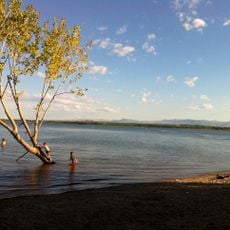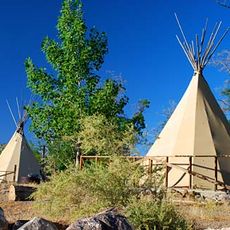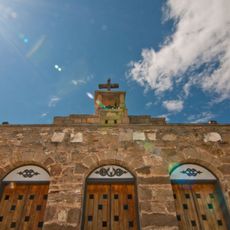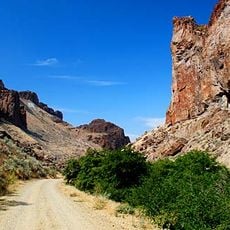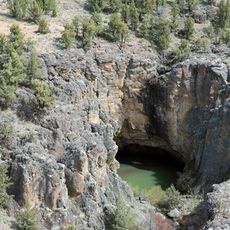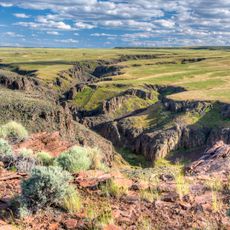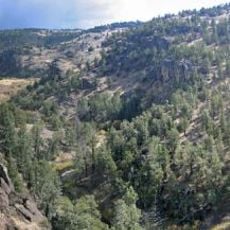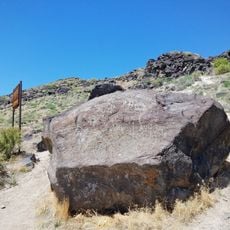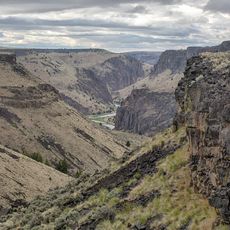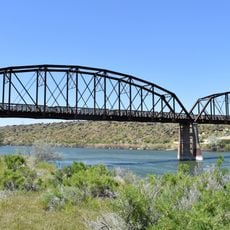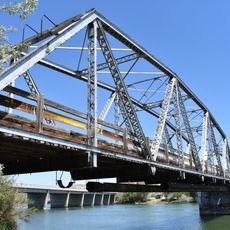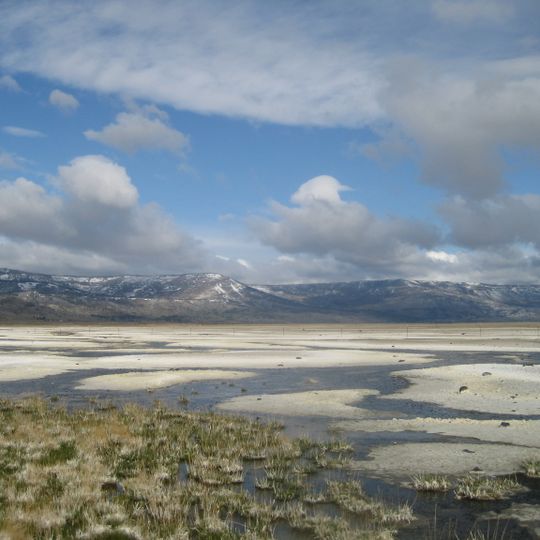
Northern Basin and Range ecoregion, Vast sagebrush ecoregion across Oregon, Nevada, Idaho and California, United States.
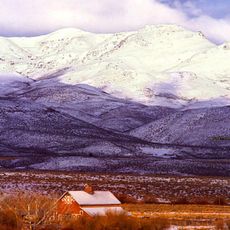
The Northern Basin and Range is an ecoregion spanning Oregon, Nevada, Idaho, and California, defined by wide valleys nestled between parallel mountain chains. Throughout this high-elevation desert landscape, natural springs and wetlands supply water that sustains both wildlife and agricultural operations despite the arid climate.
The ecoregion's southern boundary follows the highest shoreline of Pleistocene Lake Bonneville, which lay to the south and inundated the Central Basin and Range, not this region. The EPA designated the Northern Basin and Range as a Level III ecoregion covering parts of Oregon, Idaho, Nevada, Utah and California.
Most public land in the ecoregion is managed by the Bureau of Land Management, and livestock grazing is the main land use across the sagebrush steppe. On the Fort Hall Indian Reservation in Idaho, Shoshone and Bannock land lies within the Semiarid Hills and Low Mountains subregion. Groves of aspen and willows line streams in that subregion, which also holds designated critical habitat for Yellowstone cutthroat trout.
Most of the region is rangeland managed by the Bureau of Land Management, so access follows public-land rules rather than marked trails. Elevations run from about 4,000 feet on the lava plateau to 9,900 feet in the high mountains, and winters are cold at the higher levels. Carry your own water; the western basins are internally drained and the eastern streams feed the Snake River system.
The western side of this region features internal drainage where water remains trapped in basins, while the east drains outward through the Snake River. This creates two distinctly different ecological zones with contrasting water patterns and habitats.
The community of curious travelers
AroundUs brings together thousands of curated places, local tips, and hidden gems, enriched daily by 93,780 contributors worldwide.