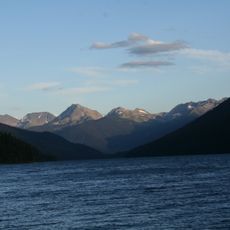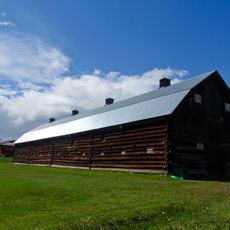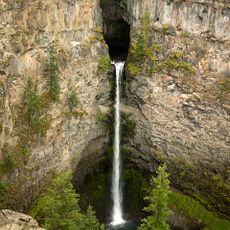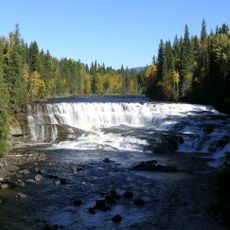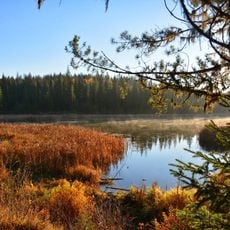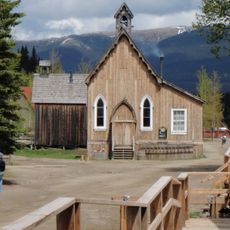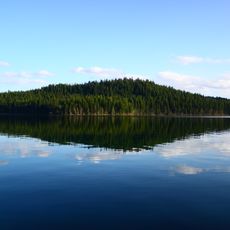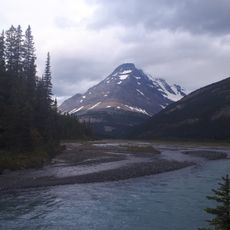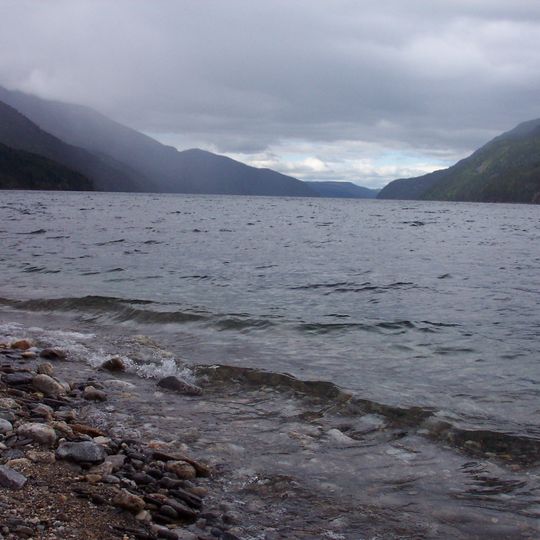
Quesnel Lake, Glacial lake in British Columbia, Canada.
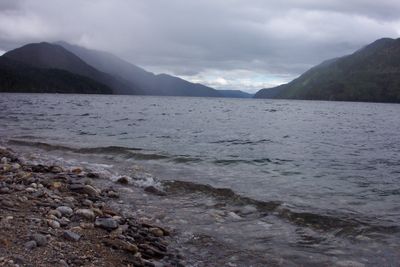
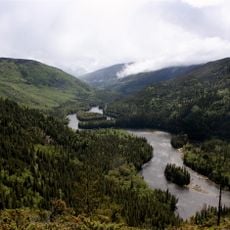
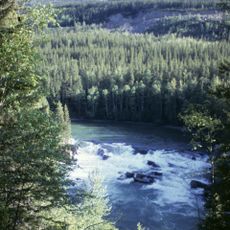
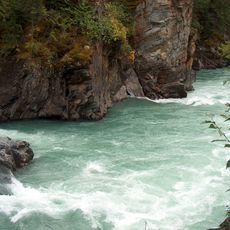
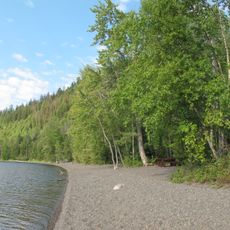
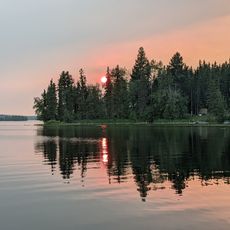
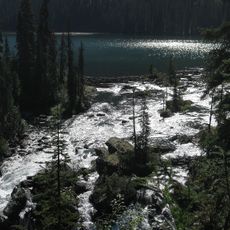
Quesnel Lake is a Y-shaped glacial fjord lake in British Columbia's Quesnel Highland, at the edge of the Cariboo Mountains. It covers 266 km², reaches a maximum depth of 506 m, and measures 95 km long and up to 3.5 km wide. Its 30 km northern arm is fed by the Mitchell River, while the Niagara Creek enters the 50 km southern arm; the Quesnel River drains the lake toward the Fraser River.
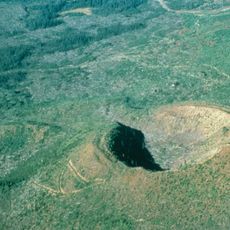
Quesnel Lake lies in the traditional settlement and hunting territory of the Tsilhqot'in. On 4 August 2014 the tailings pond of the Mount Polley copper and gold mine breached, sending about 25 million cubic metres of water and slurry into Polley Lake and Quesnel Lake and temporarily cutting off drinking water for residents of Likely. In 2017 the mine received a permit to discharge wastewater into the lake.
Quesnel Lake lies within the traditional settlement and hunting territory of the Tsilhqot'in, not the Carrier. The lake's Y-shaped arms, fed by the Mitchell River to the north and Niagara Creek to the south, fall inside this homeland. Visitors should understand the water and surrounding land as part of that enduring territory.
Visitors can reach the lake by boat, small aircraft, or helicopter, with lodges scattered along the shoreline. The best time to visit is May through September when water travel conditions are most favorable.
At roughly 511 meters deep, this is the deepest lake in British Columbia and one of the world's deepest fjord lakes. This extreme depth creates one-of-a-kind conditions for water temperature and ecosystems found in few other places.
The community of curious travelers
AroundUs brings together thousands of curated places, local tips, and hidden gems, enriched daily by 92,729 contributors worldwide.