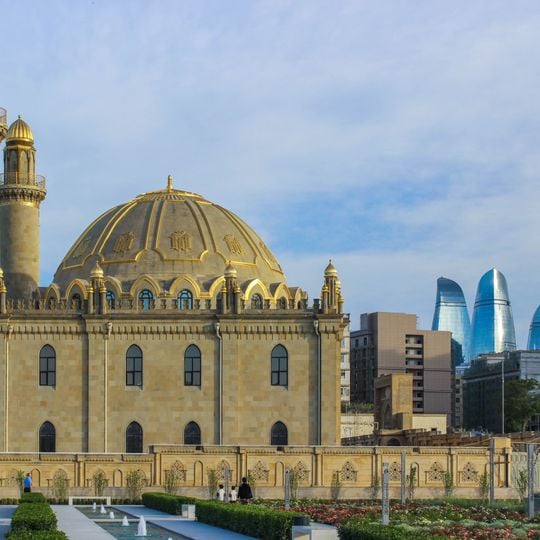
Taza Pir Mosque, Religious monument in Yasamal district, Baku, Azerbaijan
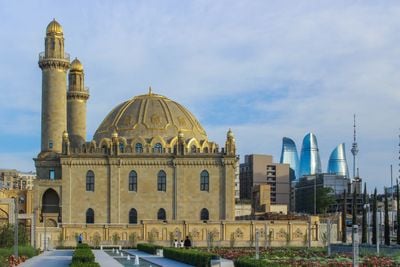
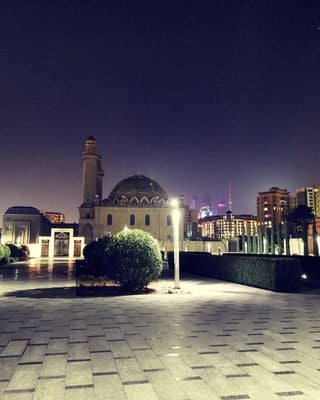
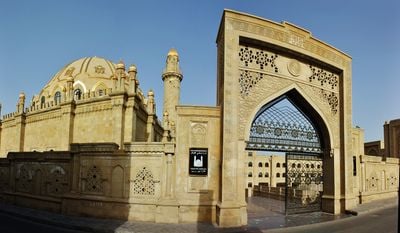
Taza Pir Mosque is a pale tan stone building in central Baku with a broad ribbed central dome, gold script on its surface and a band of arched windows below. A single tall cylindrical minaret with a balcony and gold-topped cap stands on the left. The rectangular facade has tall arched windows with dark glass, and a low stone wall with decorative panels runs along the base.
Construction began on 23 July 1905 on the site of the former village of Khalfadam, a place of pilgrimage, funded by Nabat Khanum Ashurbeyova. Work stopped at her death and resumed under her son, finishing in 1914. Closed after the 1917 revolution, the building served as a cinema and a warehouse before reopening as a mosque in 1943. Restored from 2005, it was inaugurated on 6 July 2009.
The name Təzəpir means "new shrine", because the mosque was built over the tomb of the 14th–15th-century scholar Abu Seyid Abdulla, which visitors reach by stairs descending beneath the building. The interior walls and the space under the dome carry 1,400 square metres of Azerbaijani painting and Eastern ornament. The Caucasus Muslims Office is based in the complex.
The building is open during daily prayer times and accommodates up to 720 worshippers on its prayer carpet. Visitors should dress respectfully and remove their shoes before entering the prayer hall.
The tomb of the 14th–15th-century scholar Abu Seyid Abdulla lies not above but beneath the mosque: visitors descend a staircase to reach the shrine under the building. The site was known as Khalfadam until the mid-20th century, and the mosque takes its name from the new (təzə) shrine (pir) built over the grave.
The community of curious travelers
AroundUs brings together thousands of curated places, local tips, and hidden gems, enriched daily by 95,133 contributors worldwide.