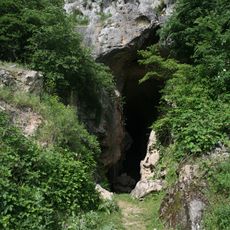
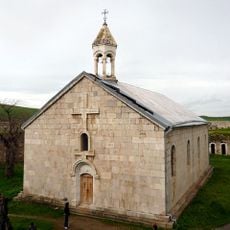
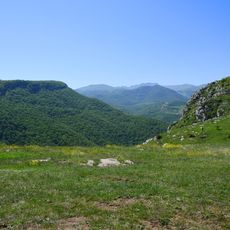
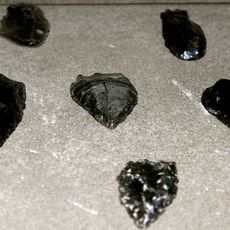
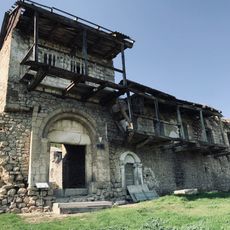
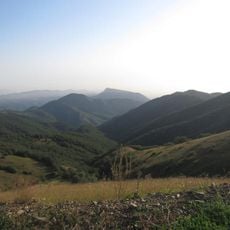
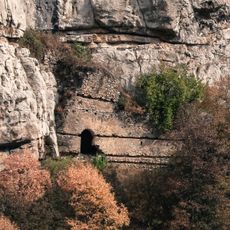
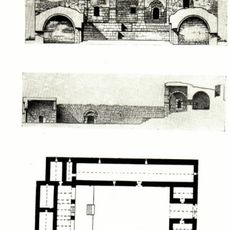
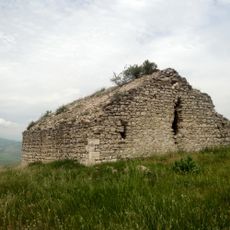
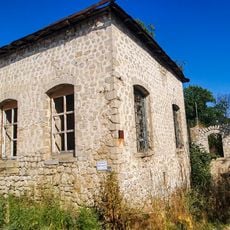
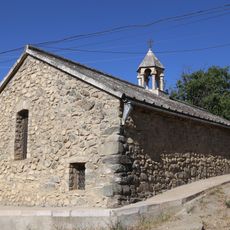
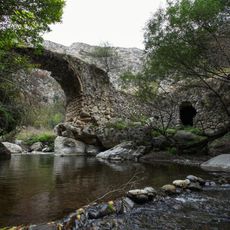
Gtichavank, Armenian monastery in Tugh village, Azerbaijan.
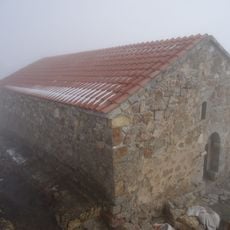
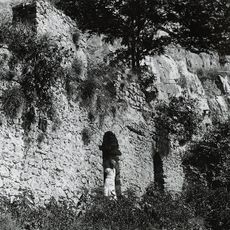
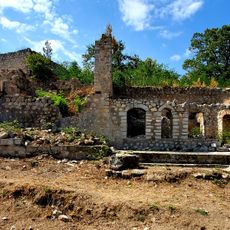
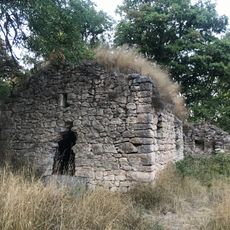
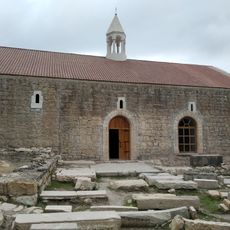
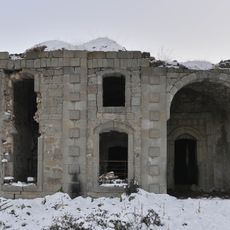
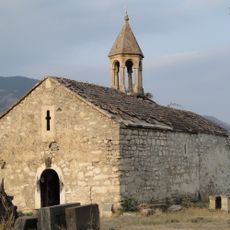
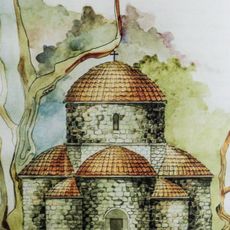
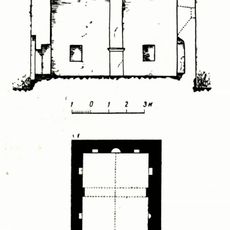
Gtichavank consists of two adjacent churches, a gavit' and living quarters on the northern slope of Toghasar, 1.8 km northwest of Togh. The main church, built of smooth-hewn felsite, has a cylindrical dome with a spire, twin buttresses and a single western entrance. North of it stands a single-nave basalt church whose dual sacristies lie under the chancel floor, an unusual feature in Armenian architecture.
Gtichavank is first documented as a bishop's seat in the 5th century, and a representative took part in the Armenian church council at Partaw in 704. From the late 8th century it was patronised by the Aranshahik rulers of Dizak. The main church was built in 1241–46 by the bishops Sargis and Vrtanes of Amaras Monastery, as an inscription on its northern wall records. A 1717 repair of the dome and an 1868 earthquake that destroyed the single-nave church preceded its abandonment.
The monastery's name is rendered Gtchavank in Armenian and Ktişvəng in Azerbaijani. A khachkar in the gavit' was raised by Bishop Vrtanes, one of the two brothers who built the main church; a second khachkar is kept at Etchmiadzin. The gavit' also served as a burial place for Armenian nobles.
Hikers reach the monastery on the Gtichavank Loop Trail from Togh, or via the Janapar long-distance trail from Vardenis to Hadrut. In 2018 the Trails For Change NGO cleared the overgrown path and marked it with red and white painted blazes. From the monastery, an unmarked trail behind the complex also leads back down to Togh.
The gavit' holds a khachkar carved at the order of Bishop Vrtanes, one of the two brothers who built the main church in 1241–46; a second khachkar from the monastery is now kept at Etchmiadzin. The gavit' also served as a burial place for Armenian nobles, and traces of an older church stand beside it.
The community of curious travelers
AroundUs brings together thousands of curated places, local tips, and hidden gems, enriched daily by 94,515 contributors worldwide.