Albert Canal, Navigation canal in Belgium
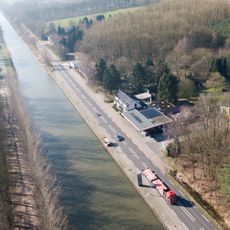
The Albert Canal connects the Port of Antwerp with the Meuse River near Liège, running through northeastern Belgium for approximately 130 kilometers. The waterway passes through industrial and residential areas while managing significant elevation changes through lock systems.
Construction of the canal began in the 1930s and was completed in 1939, following work by German firms on the project. The undertaking was an ambitious infrastructure effort of that era designed to transform transport routes in the region.
The waterway is named after King Albert I of Belgium and has shaped the region as a vital artery for commerce and industry since it opened.
The waterway can be observed from various points, particularly at the lock facilities, which are freely accessible. The best time to visit is in dry weather, when water activities are more clearly visible.
The canal's six locks overcome a 56-metre height difference between Antwerp and Liège; five locks at Genk, Diepenbeek, Hasselt, Kwaadmechelen and Olen each lift 10 metres, while the Wijnegem lock lifts 5.45 metres. In 2002 the waterway carried a record 43 million tonnes of goods, more than half of Belgium's total inland waterway traffic.
The community of curious travelers
AroundUs brings together thousands of curated places, local tips, and hidden gems, enriched daily by 93,432 contributors worldwide.