Qingliang Park, Urban park in Gulou District of Nanjing, China.
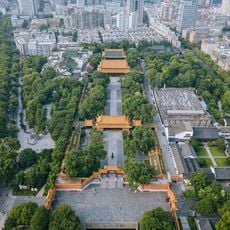
Qingliang Park covers 73 hectares on Qingliang Hill, a rise of more than 100 metres with a radius of about 4 kilometres in the Gulou District. Its entrance has three arch gates, and the characters "Qingliangshan" on the middle gate were written by the painter Gong Xian. Inside are the Qingliang Temple, the Chongzheng Shuyuan academy and Cuiwei Park, among many trees.
This location began as a retreat during the Southern Tang dynasty when people sought relief from heat, and later transformed into a center for learning. By the early 16th century, an academy was established here that made the site an educational landmark.
The temple, Qingliang Si, is where the Fayan school founder Fayan Wenyi (885–958) taught, and the Zen teacher Juefan Huihong, also called Qingliang, lived there until his death in 1128. Tiantong Rujing (1163–1228) served as abbot. The hill's name means "cool and clear," and the temple gave the park its name.
The park is accessible by a short walk from a metro station, with marked entrances that help visitors find their way in. Wear comfortable shoes and allow time to wander through the different zones, as paths wind through varying elevations and tree-covered areas.
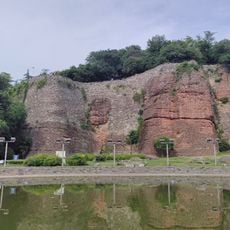
The hill was called Shichengshan, "Stone Fortress Mountain", after a fortress built here during the Eastern Wu period of the Three Kingdoms. The park's middle entrance gate bears the words "Qingliangshan" in the calligraphy of Gong Xian, a Nanjing-born painter of the seventeenth century.
The community of curious travelers
AroundUs brings together thousands of curated places, local tips, and hidden gems, enriched daily by 92,862 contributors worldwide.