Chone Monastery, Tibetan Buddhist monastery in Jonê County, China
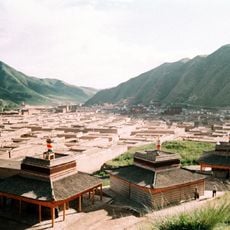
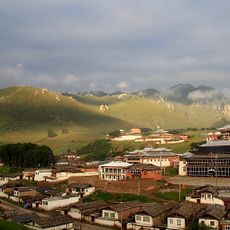
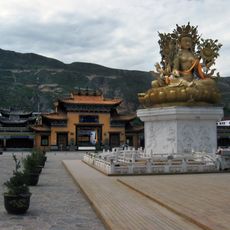
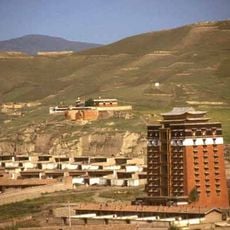
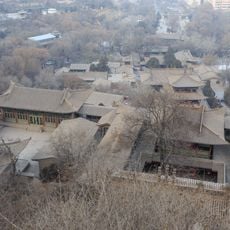
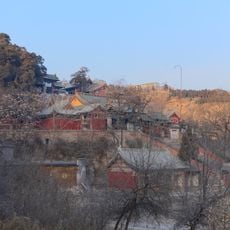
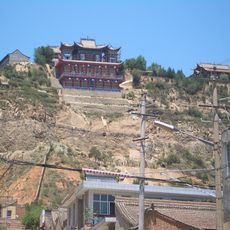
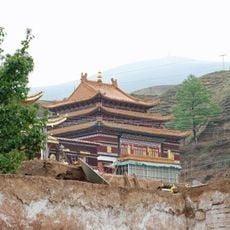
Chone Monastery is a Tibetan Buddhist sanctuary in Jonê County situated at about 2,600 meters near the Tao River. The complex comprises six main buildings centered on a large assembly hall and holds religious objects and artworks spanning different periods.
The monastery was founded in 1269 and was originally affiliated with the Sakya school of Buddhism. A major shift occurred in 1459 when the institution transitioned to the Gelug school, fundamentally redirecting its religious orientation.
The name reflects a strong commitment to the Gelug school of Tibetan Buddhism that has shaped life here for centuries. Visitors can observe how daily routines of prayer, study, and craftsmanship remain central to the community's way of living.
Visitors should know the monastery sits at high elevation and holds regular prayer sessions that can be observed. It helps to allow time for exploring the halls and artworks, and to inquire about local visiting guidelines.
The monastery was renowned for its skilled production of woodblock prints of Buddhist texts that survive to this day. These printed works demonstrate the enduring tradition of religious scholarship and textual knowledge at this site.
The community of curious travelers
AroundUs brings together thousands of curated places, local tips, and hidden gems, enriched daily by 90,837 contributors worldwide.