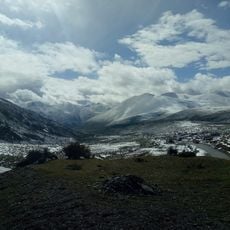
Mount Gongga, Mountain summit in Garzê Tibetan Autonomous Prefecture, China.
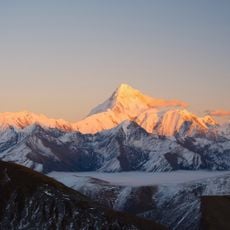
Mount Gongga is a mountain summit in Garzê Tibetan Autonomous Prefecture that rises to 7,556 meters, making it the highest peak in Sichuan province. It stands as the easternmost mountain of this height in the world and features steep, technically demanding slopes.
The mountain was first summited in 1932 by American mountaineers Terris Moore and Richard Burdsall via the Northwest Ridge. This achievement marked the beginning of climbing activity on this demanding peak.
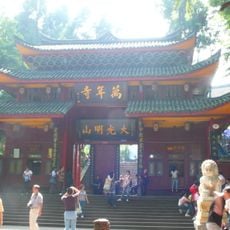
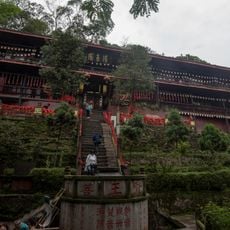
The name comes from Tibetan: གངས་དཀར (gangs dkar) means "white snow peak", while the prefix མི་ཉག (Mi nyag) refers to the Minyag Tibetans living northwest of the mountain. The eastern slopes are mostly inhabited by Han Chinese and the western slopes by Tibetans, making the massif a cultural boundary between Han and Tibetan areas. Near the base camp at Daozhaichong stands a temple to Sun Enmiao, a Tang-dynasty figure granted the title "King of Medicine" by an emperor.
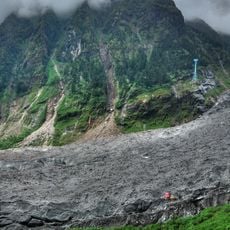
Foreign climbers were barred from the massif until 1980, when registration opened; ascents are still arranged through official channels. The standard approach is from the east, where Hailuogou's glacier and its 1,080-metre icefall can be reached by cable car to a viewing platform. A four-day, roughly 90-kilometre circuit between Laoyulin village in Kangding and Caoke in Shimian is walked by trekkers, and most accidents on it come from altitude sickness near the Riwuqie pass camps.
In 1981, eight members of a Hokkaido mountaineering federation team died in a fall. Two of their belongings included fourteen butterfly specimens collected near base camp, later identified as Bhutanitis mansfieldi, a species with no other specimens for over sixty years.
The community of curious travelers
AroundUs brings together thousands of curated places, local tips, and hidden gems, enriched daily by 92,804 contributors worldwide.