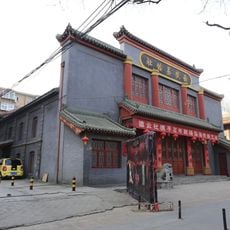
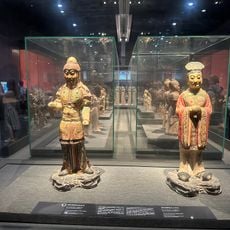
Huaqing Palace, Imperial palace complex at Mount Li, Lintong District, China
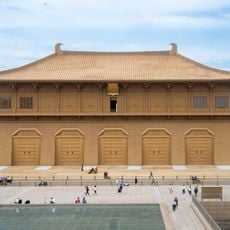
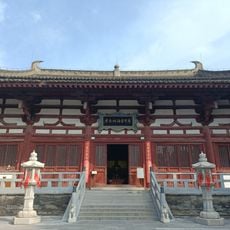
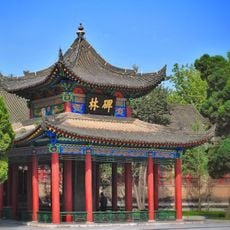
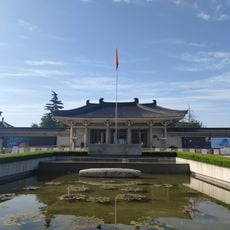
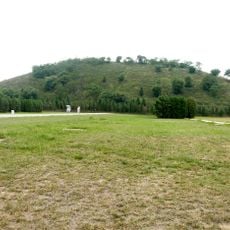
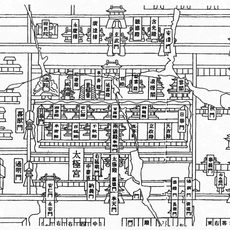
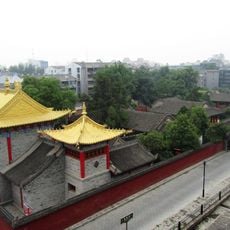
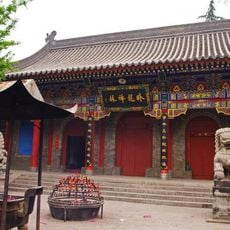
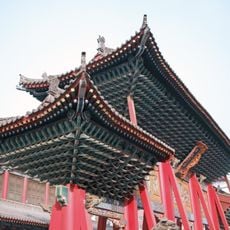
Huaqing Palace is a Tang imperial detached palace at the northern foot of Mount Li in Lintong District, Xi'an, Shaanxi. Its palace city is a square, north-facing double-walled enclosure entered through the Jinyang Gate, with the Zhaoyang Gate on the south leading to the mountain garden. The southern half held eight hot-spring pools, from east to west the Jiulong (Lotus), Guifei, Xingchen, Taizi, Shaoyang, Shangshi, Yichun and Chang pools.
The first structures on this site date to the Zhou Dynasty, when the hot springs were already valued for their properties. The Tang Dynasty brought the most substantial expansion, especially under Emperor Xuanzong in the 8th century, when the palace took on the form seen today.
Yang Yuhuan, the future Yang Guifei, was lodged at the palace as a Daoist nun in 740, before being named guifei (imperial consort, not empress) in 745. From then Xuanzong came each October and returned the following spring. The "Huaqing" name refers to the hot springs, and the pools are still shown to visitors.
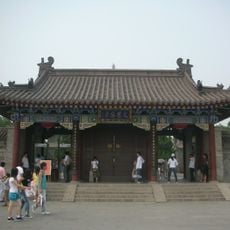
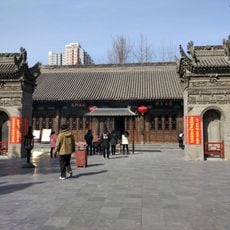
The main entrance is easy to reach on foot from Huaqing Pool Station on subway line 9. Arriving early in the morning gives the best chance to move freely through the pools and pavilions before larger groups arrive.
The pools were not simply filled with spring water: according to the Minghuang Zalu, Emperor Xuanzong's Jiulong Hall bath held white marble beams and lotus flowers sent by An Lushan, along with marble fish and geese that moved their scales and wings when he entered. Xuanzong had the figures removed. The Guifei Pool was likewise ringed with white marble lotus carvings.
The community of curious travelers
AroundUs brings together thousands of curated places, local tips, and hidden gems, enriched daily by 93,808 contributors worldwide.