Huāniǎoshān Lighthouse, Maritime navigation beacon in Zhoushan, China
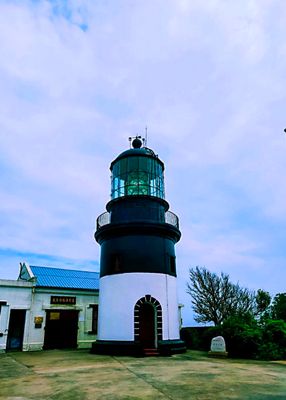
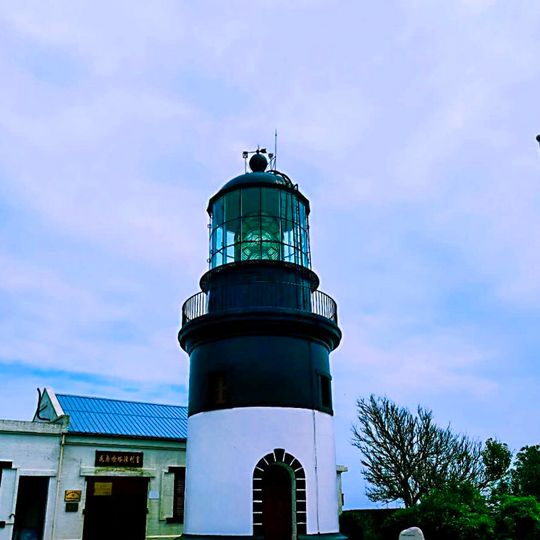
The Huaniaoshan Lighthouse stands on a headland at the northwest corner of Huaniao Island, at the northern end of the Zhoushan群岛. Its cylindrical tower is 16.5 metres tall: the lower section is white, built of concrete and masonry, while the upper section is clad in black iron plates. Inside are four floors, topped by a cast-bronze dome with a wind vane and a glazed lantern room with an external gallery.
The lighthouse was built in 1870 with British funding and labour recruited from Shanghai, after the Qing customs service planned a first group of lighthouses for the busy routes from Shanghai and Ningbo to Japan. Britain managed it until Japan took over in 1943; it was bombed during the war with only slight damage. China received it in 1950, and the Shanghai Maritime Safety Administration now manages it.
The International Association of Maritime Aids to Navigation and Lighthouse Authorities recognized this structure as one of the Historical Lighthouses of the World in 1997.
The 2 kW halogen spotlight in the lantern room turns once per minute, sending four beams with a range of 24 nautical miles. In fog, the diaphone sounds two 1.5-second blasts every 80 seconds, audible up to 4 nautical miles; locals call it the "Old Yellow Ox".
The fog signal, a two-blast horn sounding every 80 seconds with each blast lasting 1.5 seconds, carries up to 4 nautical miles, the longest range of any Chinese fog signal; locals call it "Old Yellow Ox" for its low call. The tower's four-sided lens rotates once a minute, sending four beams 24 nautical miles.
The community of curious travelers
AroundUs brings together thousands of curated places, local tips, and hidden gems, enriched daily by 93,062 contributors worldwide.