Jiuduansha, Nature reserve and alluvial island in Zhuqiao, China
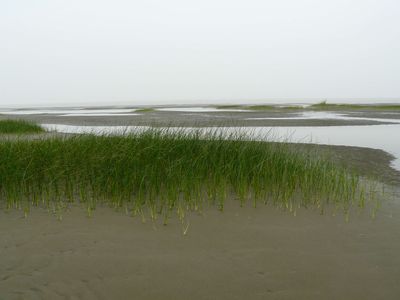
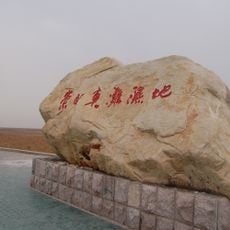
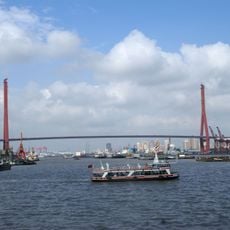
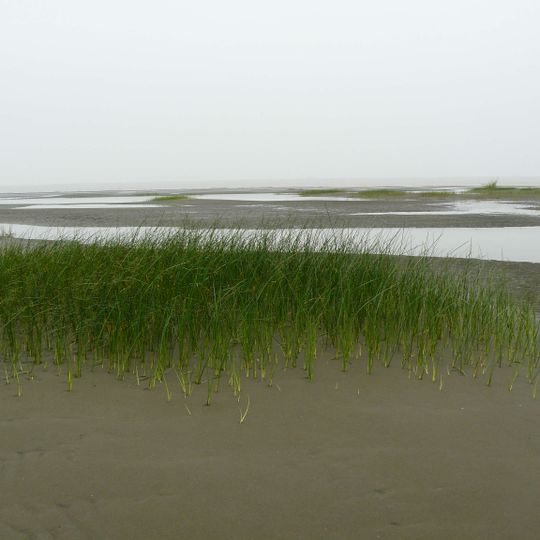
Jiuduansha is a group of four intertidal shoals at the mouth of the Yangtze, administered as part of Pudong's Zhuqiao town. The shoals are Shangsha, Zhongsha, Xiasha and Jiangyanansha, also called Upper, Middle, Lower and South Jiuduansha. Together with surrounding water to a depth of 6 metres they form a reserve of 423.5 square kilometres, of which only 114.6 square kilometres lies above sea level.
Jiuduansha began as part of the Waitongsha shoal. Yangtze floods in 1949 and 1954 linked a series of troughs and cut it off from Tongsha shoal. Shanghai's universities studied the shoals from the 1990s, and in 1995 cordgrass was planted to stabilise them. The municipal government made it a nature reserve in March 2003, and it became a national nature reserve in 2005.
The name means "Nine-Part Sands", but the nine is colloquial for "several": the group actually has four shoals, Shangsha, Zhongsha, Xiasha and Jiangyanansha. The southern shoal is named after the steamer SS Kiangya, which exploded nearby in 1948. Jiuduansha is the spawning ground of the hairy crab, a Shanghai delicacy.
Access is limited since this is a protected nature area where wildlife comes first. The best time to visit is during migration seasons when birds and marine animals are most active.
South Jiuduansha is called Jiangya Nansha after the SS Kiangya, a passenger steamer that exploded nearby in 1948, probably from a mine left over from the Second World War or the Chinese Civil War. The other three shoals are Shangsha, Zhongsha and Xiasha.
The community of curious travelers
AroundUs brings together thousands of curated places, local tips, and hidden gems, enriched daily by 94,629 contributors worldwide.