Tiantaishan Wulong Temple, Buddhist temple in Pingba District, China
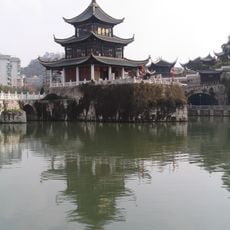
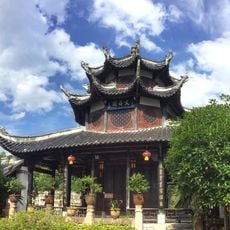
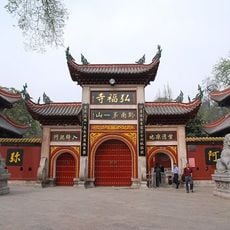
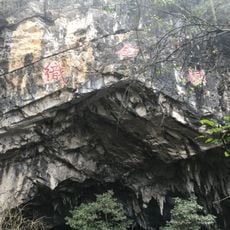
Tiantaishan Wulong Temple, also called Qingjing Chan Monastery, crowns a roughly 70-metre hill with cliffs on three sides and a steep slope on the fourth. Its walls follow the cliff edge, enclosing the Shanmen gate, Dafo Hall (10.29 by 8.42 m), Yuhuang Pavilion (8.1 by 5.48 m, two storeys, triple eaves), Guansheng Hall (12.9 by 8.63 m) and Zushi Hall (12.44 m wide).
The temple served as a residence for Ming Dynasty general Wu Sangui and houses his personal belongings including his sword and ceremonial robe. These relics reflect the site's military and political importance during classical Chinese history.
The temple holds an exhibit of costumes and photographs from local Dixi Opera, or "ground opera" performances. Dixi is performed by residents of nearby Tianlong Tunbao, a Ming-era garrison town, and the displays show the masks and staged scenes of this village theatre tradition.
The temple sits on a roughly 70 m hill with cliffs on three sides and a steep slope on the fourth; the climb is short but steep. The halls stand close together on the summit, with the outer wall built against the cliff edge. Watch your footing on the narrow paths between buildings.
The temple was once home to Ming general Wu Sangui, and his sword, robe and water bucket are displayed there. An exhibit also shows costumes and photographs from local Dixi Opera, the "ground opera" performed in the surrounding villages.
The community of curious travelers
AroundUs brings together thousands of curated places, local tips, and hidden gems, enriched daily by 94,105 contributors worldwide.