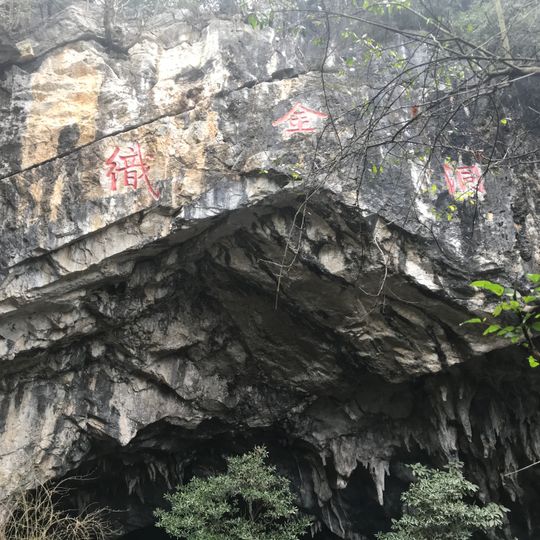
Zhijin Cave, Karst cave in Zhijin County, China
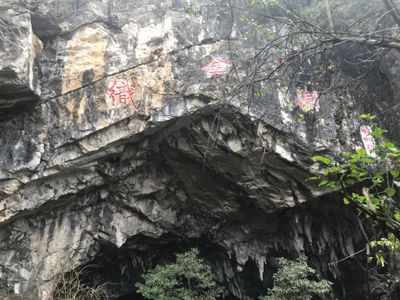
Zhijin Cave is a three-layer karst cave in Minzhai Village, Zhijin County, Guizhou, 23 km northeast of the county town and 166 km from Guiyang. Explored length is 13.5 km over a 7 km2 area, and it is believed to have the largest unsupported roof span of any cave. Its interior holds over 120 crystalline formations, stalactites and the 17 m Silver Rain Tree.
Originally called Daji Cave, it was discovered in 1980 by the Zhijin County Tourism Resources Exploration Team. In 1988 the Chinese State Council designated the surrounding Guizhou Zhijin Cave Scenic Area a national-level tourist site. The scenic area covers 307 km2 and includes Zhijin Old Town and the Luojie River Scenic Area.
The name Zhijin means "weaving gold"; the cave was first called Daji Cave, a name still remembered locally. The 17 m "Silver Rain Tree", a transparent flower-like crystal, is the formation most often pointed out to visitors. The surrounding Guizhou Zhijin Cave Scenic Area, designated a national-level tourist site in 1988, also takes in Zhijin Old Town and the Luojie River Scenic Area.
The cave lies 23 km northeast of Zhijin county town and 166 km from Guiyang. Its three stacked levels run about 13.5 km in total, so allow time for a long underground route. The Guizhou Zhijin Cave Scenic Area, a national-level tourist site since 1988, also covers Zhijin Old Town and the Luojie River area across 307 km2.
One formation stands out for its appearance - crystalline deposits arranged to resemble a flowering tree. The transparent mineral formations create a natural sculpture that catches the light in unexpected ways.
The community of curious travelers
AroundUs brings together thousands of curated places, local tips, and hidden gems, enriched daily by 94,156 contributors worldwide.