Jiaxiu Pavilion, Ming-era pavilion in Nanming District, Guiyang, China
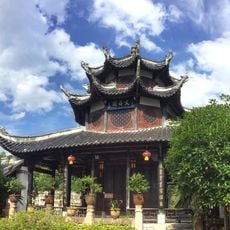
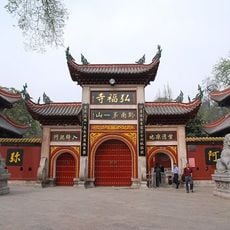
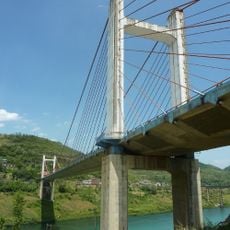
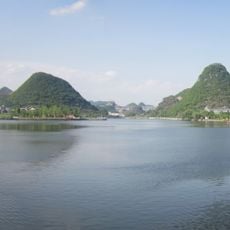
Jiaxiu Pavilion is a three-level Ming Dynasty structure rising about 20 meters along the Nanming River bank, decorated with red beams, green roof tiles, and intricately carved stone railings. The complex comprises three connected sections: a bridge, the main tower, and an adjacent garden area.
Jiang Dongzhi, governor of Guizhou, built a dam and a pavilion named Jiaxiu in 1597, meaning 'outstanding success in the imperial examinations.' It burned in 1621 and was rebuilt by governor Zhu Xieyuan as Laifeng Pavilion; in 1689 governor Tian Wen restored the original name. The present structure dates from a 1909 reconstruction.
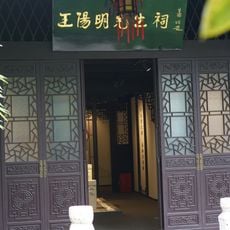
The pavilion houses a collection of stone carvings, calligraphy, and paintings created by local and imperial artists over the centuries. These works reflect the artistic traditions and intellectual life that flourished in this region during different periods.
The site comprises multiple areas easily explored on foot, offering a connected experience across the different zones. Several local bus routes serve the area nearby, making public transportation convenient for getting there.
The long couplet by Guiyang Hanlin scholar Liu Yunliang hangs in the pavilion and is counted among China's celebrated long couplets, alongside those of Kunming's Daguan Tower and Chengdu's Wangjiang Tower. Its 174 characters trace Guizhou's history from the Qin and Han dynasties to the Ming, and visitors can read it on the pillars.
The community of curious travelers
AroundUs brings together thousands of curated places, local tips, and hidden gems, enriched daily by 93,087 contributors worldwide.