Yunshantun, Cultural heritage village in Anshun, China.
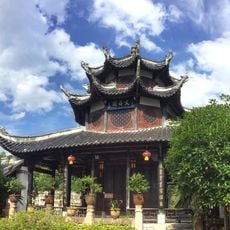
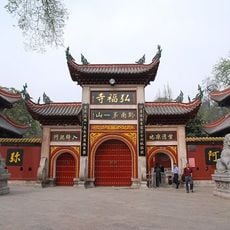
Yunshantun is a village with traditional buildings that feature detailed wood carvings and are connected by stone paths. The structures date from the Ming and Qing dynasties and form a cohesive village layout reflecting these two periods.
The village began during the Ming Dynasty when soldiers were sent to Guizhou to stabilize the region. This military presence shaped the village's founding and early development.
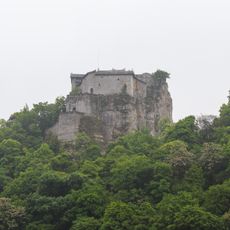
Yunshantun is a Tunpu settlement, founded in the early Ming dynasty when troops were garrisoned in Guizhou. The village name combines yun (cloud) with shan (mountain) and tun (garrison camp), recalling this military origin. The complex comprises two adjacent fortified villages, Yunshantun in the valley and Benzhai on the slope, and its buildings mix Jiangnan and local styles.
Visitors can walk freely through the village streets and observe daily activities such as agricultural work, traditional weaving, and local food preparation. The best times to visit are early morning or late afternoon when the village is most active.
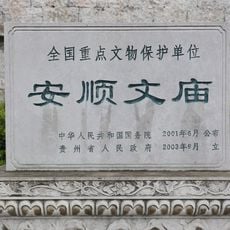
The 2001 national protection applies to the Yunshantun ancient architectural complex, not to the village itself, which was separately listed as a Chinese historical and cultural village in 2005. The complex covers two adjacent fortified villages: Yunshantun, about 150,000 square metres in a valley with gates on its east and south sides, and Benzhai, over 40,000 square metres built against the hillside.
The community of curious travelers
AroundUs brings together thousands of curated places, local tips, and hidden gems, enriched daily by 93,852 contributors worldwide.