Beijing Bell tower, Yuan dynasty bell tower in Dongcheng District, China
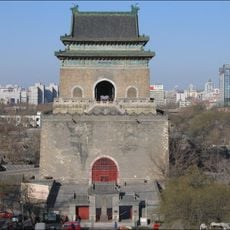
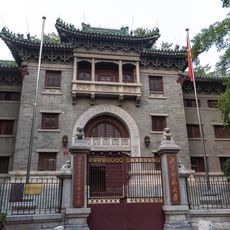
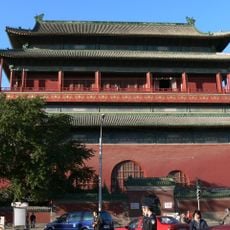
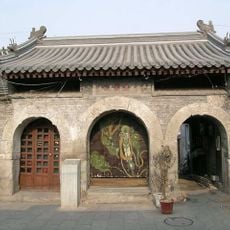
The Beijing Bell Tower is a Yuan-dynasty structure standing about 33 meters (108 feet) tall with grey stone walls and green glazed tiles, located in the old city district. Inside on the second floor sits an enormous bronze bell weighing roughly 63 tons, which forms the central feature of the building.
The tower was first built in 1272, in the ninth year of Kublai Khan's reign, as the main hall of the Wanning Temple. It was converted into a bell tower in 1420 under the Yongle Emperor, but a fire soon destroyed it. The Qianlong Emperor rebuilt it in its present form in 1747. The structure survived the 1976 Tangshan earthquake with only a stone animal head falling from the roof.
The bronze bell was rung daily at 19:00 until 1924, and its sound carried up to 20 km. A legend tells of blacksmith Deng, whose daughter threw herself into the molten bronze so the casting would succeed; the emperor named her Goddess of the Golden Furnace, and she is known as the Goddess Who Cast the Bell.
The tower has been open to tourists since the 1980s. Inside, stone stairs lead to the second-floor terrace, which has four entrances framed by stone windows. The bell is no longer rung daily; its last regular sounding was at 19:00 until 1924.
The bronze bell replaced an earlier iron one that was moved behind the Drum Tower because its sound was too faint. Cast in the Yongle reign, it bears an inscription naming the lucky day, month and year of its making, and two 2-metre wooden logs hung on either side were swung to strike it.
The community of curious travelers
AroundUs brings together thousands of curated places, local tips, and hidden gems, enriched daily by 94,057 contributors worldwide.