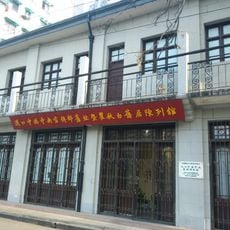
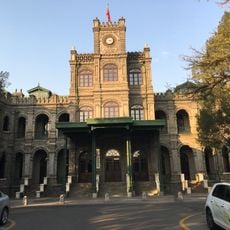
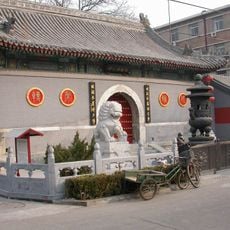
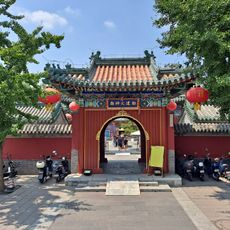
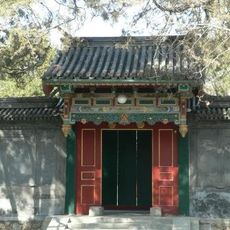
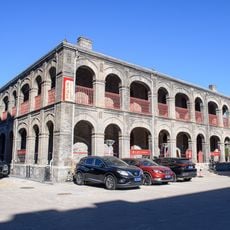
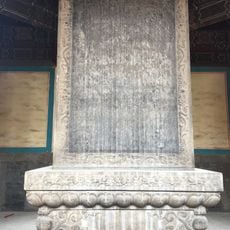
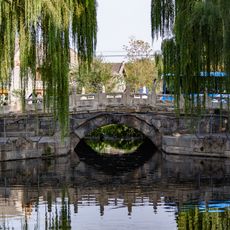
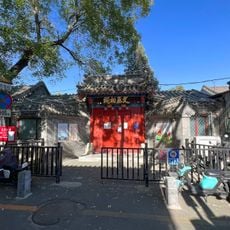
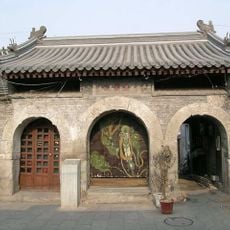
Former residence of Mao Dun, Beijing, Literary museum in Jiaodaokou Subdistrict, Beijing, China.
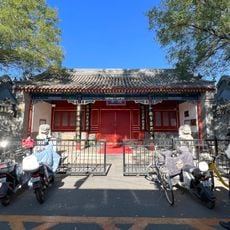
Mao Dun's former residence is a museum displaying his personal items, manuscripts, photographs, and documents across exhibition rooms. The traditional Beijing building features a quadrangle courtyard layout with carefully arranged interior spaces that represent different areas of his daily life.
Mao Dun moved into the courtyard at No. 13 Houyuan'ensi Hutong in December 1974, after it had housed Yang Mingxuan and Li Weihan. There he wrote his unfinished memoir 'The Road I Have Travelled' and died on 27 March 1981. The house was listed as a Beijing cultural relic on 24 May 1984 and opened as a museum on 27 March 1985.
The house displays the domestic life of an important modern Chinese writer through its arrangement of rooms and objects, showing how a literary figure of his era lived. Visitors can observe the personal habits and daily routines that shaped his work and thinking.
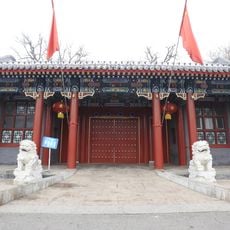
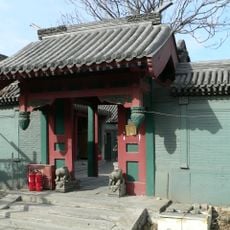
The museum is at 13 Houyuan'ensi Hutong in Jiaodaokou Subdistrict, Dongcheng District. It opens daily except Monday, 9:00 to 16:30. The two courtyards are entered through the Ruyi Gate at the southeast corner, and a narrow passage east of the front north room leads to the rear courtyard.
The rear courtyard, reached through a narrow passage east of the north room, holds five north rooms and two flowering shrubs (taipinghua) flanking them. Mao Dun's family moved in during December 1974; the house had previously been occupied by Yang Mingxuan and Li Weihan. He died there on 27 March 1981, leaving his memoir 'The Road I Have Travelled' unfinished.
The community of curious travelers
AroundUs brings together thousands of curated places, local tips, and hidden gems, enriched daily by 93,938 contributors worldwide.