Huode Zhenjun Temple, Taoist temple in Xicheng District, Beijing, China.
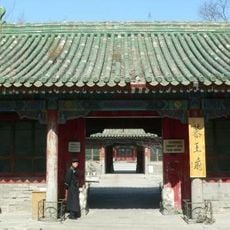
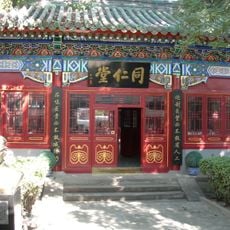
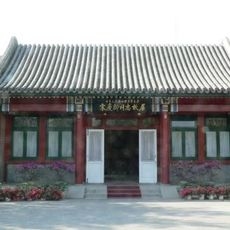
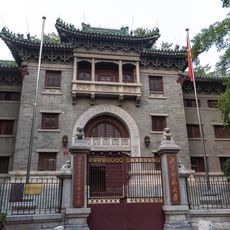
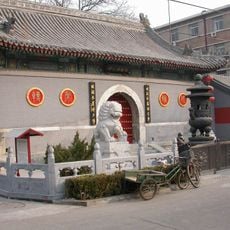
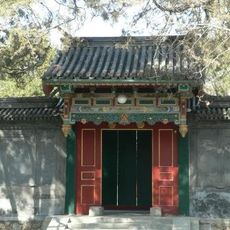
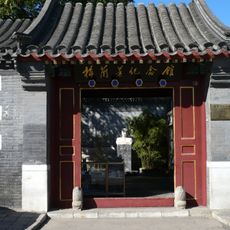
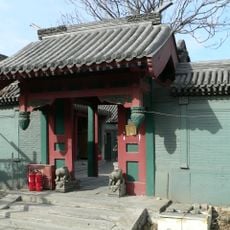
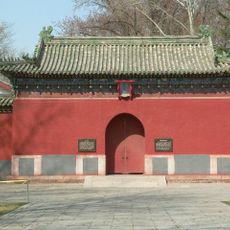
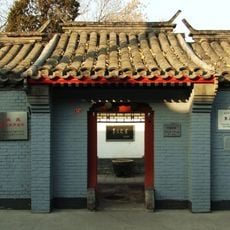
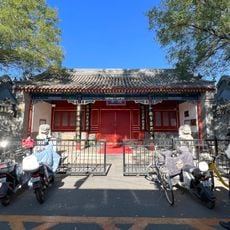
Huode Zhenjun Temple is a Taoist temple in Xicheng featuring traditional Chinese architecture with vermilion-painted double doors adorned with lion-shaped handles, gray walls, and classic roof tiles. The interior spaces are organized according to Taoist principles and contain multiple altar halls and ceremonial areas.
The temple was first built in 632, the sixth year of the Zhenguan era of the Tang Dynasty, and was rebuilt in 1346 under the Yuan emperor Shundi. In 1605, after repeated palace fires, the Ming court ordered its expansion and granted it green glazed tiles to subdue fire; a 1759 Qing reconstruction under Emperor Qianlong added yellow tiles to the gate and rear pavilion. Troops occupied it after 1949, and after residents were moved out a restoration begun in 2002 was completed on 6 March 2008.
The temple is dedicated to Huode Zhenjun, the fire god of the south, whose hall is called Yinghuo Baodian after the Mars star Yinghuo. The Ming court expanded the temple in 1605 and granted glazed tiles to ward off fire. The Daoist priest Tian Zijiu, one of the four eunuchs close to the Daoist circles, served as abbot here in the late Qing.
The temple is located on Dianmenwai Street and welcomes visitors daily without admission charges. It sits near cycling paths that connect well to the Houhai area, making it easy to include in a broader exploration of the neighborhood.
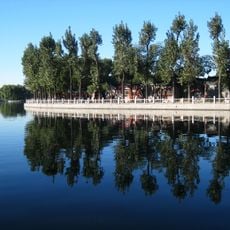
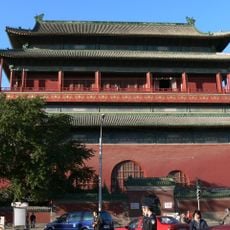
The temple's gate faces east onto Dianmenwai Street and carries a gold plaque reading "Imperial Fire God Temple"; the inner archway is inscribed "Shouguo Xianlin" on the front and "Dantian Shengjing" on the back. The rear water pavilion, once used to view Shichahai, no longer survives.
The community of curious travelers
AroundUs brings together thousands of curated places, local tips, and hidden gems, enriched daily by 93,907 contributors worldwide.